September 21, 2026 Industry news
Ten years on from the launch of Scan4Safety, we have the clearest picture yet of the difference it can make.
Having worked with healthcare organisations on Scan4Safety for much of that time, it has been encouraging to see how far some have come and how the programme has developed beyond its original use cases.
Our new evidence report brings that progress together. It draws on research involving 29 healthcare organisations and stakeholders across the UK and Ireland, international case studies and analysis of national cost data.
It shows how barcode scanning and GS1 standards are supporting safer care, returning time to clinical teams and helping organisations make better use of resources.
There is plenty in the findings to be encouraged by, but they also show how uneven progress remains. Some organisations have embedded scanning across wards, operating theatres, medicines and inventory management.
Others are still at an earlier stage. The focus now needs to be on what will help more organisations put Scan4Safety into practice.
What the evidence tells us
At its heart, Scan4Safety is about giving staff accurate information when they need it.
GS1 standards allow people, products and places to be identified consistently. Scanning at the point of care can then help staff verify that the right patient is receiving the right product or treatment. It also creates an accurate record of what was used, where, when and for whom.
A good example can be seen at Midland Metropolitan University Hospital, where Scan4Safety is supporting Closed Loop Medicines Management across all inpatient wards.
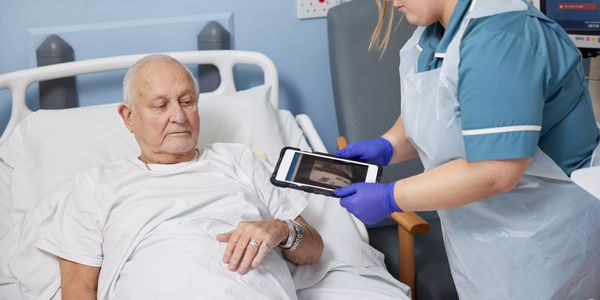
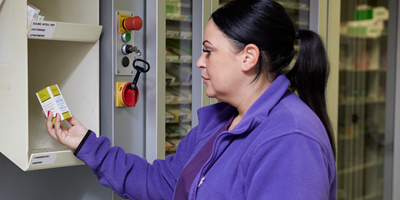
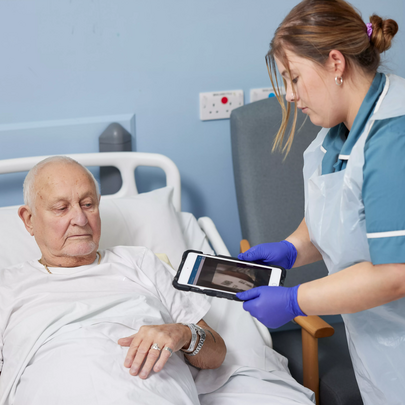
The hospital has introduced automated dispensing cabinets and smart medication carts. Medicines are prepared in patient specific drawers, then scanned against the patient identity band at the bedside before administration is recorded electronically.

This gives staff an additional check at an important point in the process and creates better information throughout the medicines pathway. It also shows how Scan4Safety has developed beyond the use cases captured in our first report.
The evidence also shows how closely patient safety and productivity can be connected.
At East Lancashire Hospitals NHS Trust, nursing staff in the emergency department were managing stock across five storerooms and maintaining supplies for trolleys and emergency grab bags.
Those tasks amounted to 168 hours every week.
Following the introduction of improved inventory management and dedicated materials management support, the equivalent working time of four full time nurses was returned to clinical care. The trust also reported no procedure cancellations caused by missing equipment over four years.
This is not simply a story about stock. It is about making sure products are available when needed and allowing clinical staff to focus on the work only they can do. There is a clear financial benefit too.
Across the first 19 providers in NHS Supply Chain’s inventory management system programme, £15.3m in savings had been captured by April 2026.
The barcode is only part of the story
Scan4Safety is often described as a barcode programme. The barcode is the visible part, but the value depends on the standards and reliable information behind it.
GS1 standards provide a common language that allows information to be identified, captured and shared consistently across different systems and organisations.
That matters as healthcare becomes more digital. Electronic patient records, inventory systems, medicines platforms and national registries all depend on accurate information. Connecting more systems will not solve the problem if the data beneath them is inconsistent.
In our work with healthcare organisations, we have seen that the strongest programmes do not begin with a barcode or a system. They begin with a problem that clinical teams want to solve.
That might be reducing the risk of the wrong product being used, improving medicine administration or identifying patients affected by a recall. Starting with the problem helps people understand how scanning can improve everyday care.
Turning evidence into action
The research confirms something else we have seen repeatedly. Technology alone is not enough.
The organisations making the strongest progress involve clinical leaders early, have visible support from their boards and give dedicated teams the authority to make implementation work. They invest in product data and system integration before going live and agree how the benefits will be measured.

Georgina Lawton, head of healthcare at GS1 UK
National requirements remain important, but mandate alone has not secured consistent implementation. National ambition needs to be matched by practical support.
Scan4Safety and GS1 standards should be built into the digital, medicines, medical device and procurement programmes shaping the future of healthcare. Accurate supplier data, compatible systems and clear measures of success all need to be part of that picture.
Implementation is not simple and organisations are starting from different places. But ten years on, we have far more evidence and practical learning to draw on.
The priority now is to use that knowledge to turn successful local practice into more consistent practice across the health system, so more patients and staff can benefit.