The Scan4Safety programme was launched in 2016 by the Department of Health and Social Care where six trusts were tasked with implementing GS1 standards for the unique identification of every person, every product and every place within healthcare.
Following the successful completion of the programme, the wealth of data and insights accumulated over the two-year period has now been published and below shares some key data highlights selected from the evidence.
Headline results
140,000 hours of clinical time released to care
Almost £5m of recurrent inventory savings
£9m of non-recurrent inventory reductions
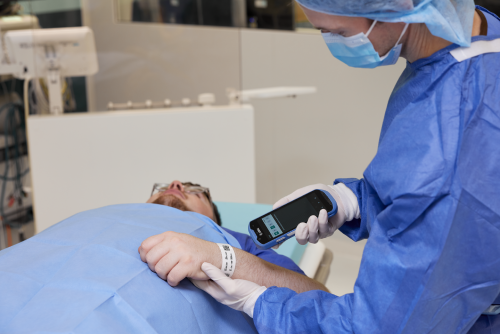
Clinician scanning a patient wristband
Scan4Safety evidence
The report shares first-hand accounts from the six trusts, along with several others that have embarked on their own Scan4Safety adoption journeys.
Results evidenced from implementation showcases the improvements made to patient outcomes, benefits outlined by the trusts and details of lessons learned over the course of the programme.
As the benefits become more widespread, more healthcare organisations are adopting GS1 standards and Scan4Safety to improve care. Today, multiple hospitals across the UK have adopted Scan4Safety with 60 per cent using GS1 standards for inventory management and 45 per cent are scanning to the point of care. National programmes (known as Scan for Safety) now also exist in Scotland and Wales.