September 02, 2026 Guest opinion piece
David Milligan, Head of Medicines Procurement and Kristy McGlynn, Digital Medicines Pharmacist at Manchester University NHS Foundation Trust (MFT) explain the importance of adopting automated barcode technology, GS1 standards and the impact on patient safety.
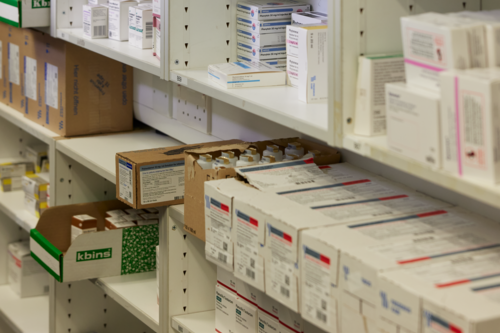
Medicines on a shelf in a hospital pharmacy
Introduction
An estimated 237 million medication errors occur annually in England's NHS facilities, with “definitely avoidable” errors costing the NHS approximately £98.5 million per year. Of these errors, more than 50 per cent are administration errors and 16 per cent dispensing errors.
While 72 per cent of medication errors are unlikely to result in harm, 28 per cent have the potential to cause significant harm or deatha.
At Manchester University NHS Foundation Trust (MFT), automated barcode technology (using GS1 standards) has been implemented to help reduce errors – both at the point of dispensing and at administration.
How have you embraced technology across MFT and how do you feel this has impacted patient safety?
Across MFT, we've made significant strides in leveraging technology to transform our operations. In the pharmacy department alone, we've implemented several systems to enhance our workflow and ensure the utmost safety for our patients. We have Epic as our electronic patient record (EPR), electronic prescribing and medicines administration (EPMA) and inventory management system. We also have BD Rowa and Omnicell-Gollmann robots, and Automated Dispensing Cabinets. Together our combination of digital systems helps manage the supply of medicines.
Automation has been at the heart of our Trust's progress. By ensuring that all our systems are interoperable and adhere to GS1 standards, we've been able to align with our Scan4Safety (S4S) programme. This alignment has not only streamlined our processes but has also improved patient safety.
One of the latest advancements we've embraced is using mobile Epic applications with hand-held Rover devices. This has enabled our clinical staff to perform tasks such as barcode medication administration (BCMA) at the patient’s bedside. Epic generates a matrix barcode on dispensing labels that allows the medicine to be linked to the medication order in the patient record.
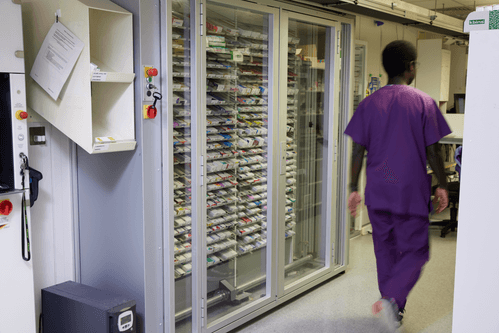
Hospital pharmacy robot
How do you feel automated medicines management, dispensing and administration has improved the service across the pharmacy department?
System interoperability and automation have improved patient safety by enabling accurate product and patient identification, both made possible using GS1 standards. Using Rover devices, we can scan the patient and the medicine ensuring the right patient is given the right drug at the right dose – critical for reducing medication errors and enhancing patient safety.
Alongside the integration of prescribing and inventory systems, this provides greater visibility throughout our medicines management process, enables greater system interoperability and aligns with the deliverables of the NHS 10 Year Health Plan.
What have been some of the challenges you’ve faced as part of the pharmacy department’s digital transformation journey?
We’ve had practical challenges related to barcode scanning, product identification and legacy system integration. However, we’ve also had some unexpected challenges, such as the need to build new products in the inventory system and transfer stock values when barcodes do not validate when scanned due to dm+d descriptor changes.
Legacy approaches to inventory configuration (which would mostly have been at VMPP (Virtual Medicinal Product pack) level) sometimes conflict with new system requirements (with more emphasis on AMPP (Actual Medicinal Product Pack)), leading to mismatches in decision support and SNOMED CT integration. There is a strong need for a mandatory national standardised prescribing and medicines database to further support interoperability.
Examples of the challenges we have observed in relation to barcode scanning include:
- Duplicate barcodes provided on some unlicensed compounded products from a single manufacturer; these barcodes were not intended for customer use but for internal use by the manufacturer. This was only recognised when we started pursuing wider use of barcode scanning
- Managing manufacturer barcode printing errors. Where a barcode for product A has been printed in error on product B, including examples of duplication of the barcode. A number of Class 4 ‘Caution in Use’ notifications have been issued by MHRA in relation to this.
- Inaccurate barcode information on dm+d. Barcode for product A is inputted against product B on dm+d.
Local mitigation has been put in place to be aware of and manage these scenarios.
Changes implemented by some manufacturers in response to the Windsor frameworkb;has seen barcodes removed from some packaging which has left gaps in the ability to identify and use these products through automated and barcode scanning technologies. For example, this means that the packs may not be able to be stored in automated dispensing systems increasing the risk of dispensing errors; and nursing staff are unable to scan the pack at the point of care for medicines administration.
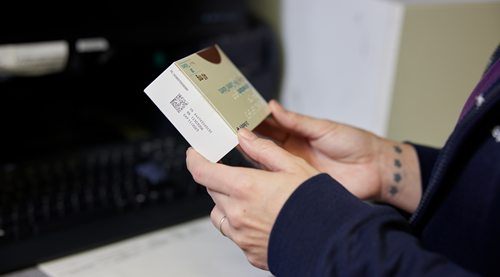
Pharmacist holding a medicine displaying the GS1 DataMatrix and GTIN
There are growing calls from healthcare to ensure 2D barcodes are included on medicines packaging encoding as a minimum the GTIN, batch number and expiry date, including an open letter from the Chief Pharmaceutical Officers from across the UK to marketing authorisation holdersc.
The Royal Pharmaceutical Society have issued a position statement calling for manufacturers and market authorisation holders to voluntarily include 2D barcodes for regulatory changes to mandate 2D barcodes on UK medicines packaging and for GTIN information to be included in the licensing process for medicines. Minimum data required is GTIN, batch number and expiry dated.
How have the changes been adopted by the clinical teams at ward level when administering medicines to patients? Have you seen an improvement in patient and staff safety?
Nurses use the Rover devices alongside Epic to support medication administration. The system provides clear error alerts for instances of wrong patient, medication or route which helps to ensure the five rights of medicines administration are adhered to.
The nurses will scan the barcode on the patient wristband, which is compliant with the latest NHS England standard DCB1077, and then scan the medicine barcode (usually a GS1 DataMatrix). Alerts will be visible to the clinical user if a mismatch is identified, ensuring safe practice for both patients and staff.
In the instance of a product recall, how easy is it to now identify affected stock in comparison to previous systems?
Scanning GS1 DataMatrix barcodes at the receipt of medicines, dispensing or administration stages helps capture batch numbers for recalls.
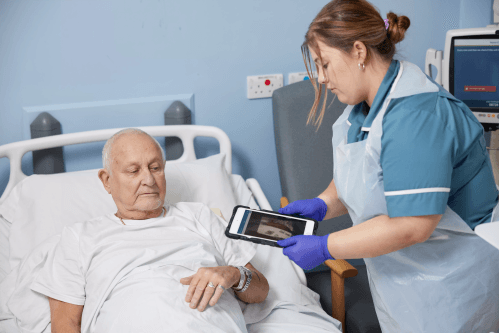
Nurse scanning a patient wristband at the patient bedside
When administering medicines to a patient, the information about the medicine (including the batch number) can be electronically captured in the EPR, which we can report on as and when needed. When using the Rover devices, clinical teams are notified to confirm the right patient, right drug and right dose before administration.
Although the EPR system can support recall identification when barcodes are scanned, data gaps and workflow limitations prevent full reliance on the system for recall management e.g., as it’s not feasible to scan every individual pack on receipt. A recent review of our response to a MHRA medicines notification [EL(26)A/25] identified that although the functionality exists to respond to patient level recalls, improvement work is still required to enhance compliance.
Where do you see the trust future state for improvements around sustainability?
There is a recycling system in place to ensure waste is kept to a minimum. Across all wards we have containers in place to collect any unused medicines. Once collected, the Epic dispensing label matrix barcode is scanned to assist processing the return in the inventory system.
With the NHS 10 Year Health Plan, what do you think the biggest changes across your organisation will be around improved digital capabilities, a single patient record and supporting the needs across the community?
Across MFT we have existing links within our EPR to GP records and the Greater Manchester Care Record, allowing access to medicines histories for our patients. There is the aspiration for a single patient record to ensure all relevant information, such as mental health medications, is consistently recorded and accessible across different systems.
We also have the MyMFT patient portal app available, which empowers patients to manage their healthcare information and view appointments and test results. With the current development of the NHS App, it will be interesting to see how these tools will integrate and complement each other.
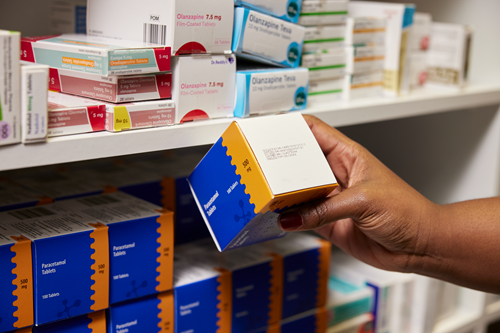
Box of medicines with the GS1 GTIN and DataMatrix barcode visible
What would be your key takeaway message to other NHS organisations and pharmaceutical manufacturers and suppliers?
Digitalisation across the NHS is crucial. However, one challenge we face is around capturing accurate data from the barcodes placed on pack. This is sometimes due to a lack of visible barcodes or the absence of a GS1 DataMatrix. Therefore, this makes it difficult to accurately capture complete data sets and to do so digitally.
From an NHS trust perspective, it is important for pharmaceutical manufacturers and suppliers to ensure any medicines supplied to the NHS have a GS1-compliant barcode to support our Scan4Safety efforts and improve patient safety.
A good place to start for trusts would be to identify current systems, interoperability requirements and where GS1 standards can be used. A key takeaway for NHS organisations would be not to underestimate the complexity of such projects, as there will always be an ongoing need for system refinement and harmonisation across merged sites.
Scan4Safety and GS1 have always been a high priority across the organisation as a tool to improve patient safety and operational efficiency. This has driven significant buy-in from senior stakeholders to support implementation.
References
- https://bmjgroup.com/237-million-medication-errors-made-every-year-in-england
- Windsor Framework agreement on the supply of medicines in Northern Ireland explained - GOV.UK
- Open Letter: The Safety and Operational Benefits of 2D Barcodes, Chief Pharmaceutical Officers, June 2025
- Barcode Standards and Patient Safety | RPS
Support and information

Report: impact of missing barcodes
Download our GS1 UK report into the impact of missing and inaccurate barcodes on NHS pharmacy services.