
What is the Deposit Return Scheme?
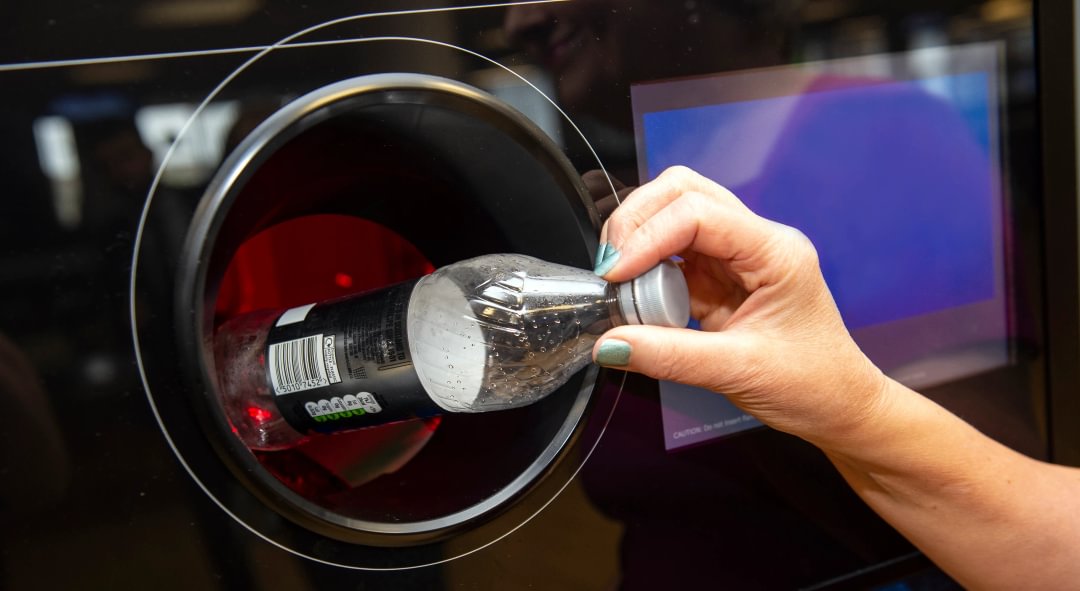
The Deposit Return Scheme (DRS) is a UK initiative designed to increase recycling rates for drinks containers. Consumers pay a 20p deposit when purchasing an in-scope drink and receive it back when the empty container is returned through a reverse vending machine (RVM) or other approved return point.
An in-scope drink is a drink container made wholly or mainly from PET plastic, aluminium or steel and between 150ml and 3 litres in volume.
To make this possible, every deposit-bearing product must be uniquely identifiable. This is where product identification standards, GTINs and barcodes play an important role.
Is a QR code required for DRS?
No. QR codes powered by GS1 are not required for DRS but incorporating them during DRS-related packaging updates can support future barcode adoption while avoiding additional packaging changes later.
Products in scope of DRS can continue to use GS1 linear barcodes for product identification, with a new GTIN assigned to DRS-compliant products. However, the Deposit Management Organisation (DMO) has confirmed that reverse vending machines (RVMs) will be able to recognise QR codes when the scheme launches, providing an opportunity for brands to adopt a future-ready barcode while preparing for DRS.
Why consider moving to QR now?
For in-scope products, a new GTIN will be needed, which means packaging artwork and barcodes will need to be reviewed and updated.
Because these changes are already being made, this can be a cost-effective opportunity to add a QR code powered by GS1 at the same time.
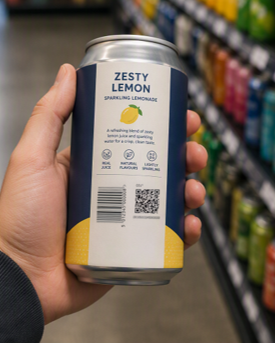
A QR code powered by GS1 can carry the same new GTIN as your linear barcode. Adding a QR code alongside your linear barcode means you can continue to meet identification requirements while gaining access to additional functionality through a single barcode.
Adding a QR code powered by GS1 now can help you:
Avoid a second packaging redesign as industry moves towards 2D barcodes at point-of-sale
Carry the same GTIN used for product identification while supporting future barcode requirements
Create opportunities for consumer engagement, including product information, promotions, loyalty programmes and sustainability content
Align your packaging with technology that DRS infrastructure is expected to support
Want more detail?
For more information on identification requirements, GTIN changes and barcoding for DRS, see the article below.
In summary
QR codes powered by GS1 are not currently mandatory for DRS
DRS infrastructure will support both approved linear barcodes and QR codes powered by GS1 from launch
In-scope products will require a new GTIN and packaging updates for DRS
Making the move to a QR code powered by GS1 while updating packaging can help avoid a future redesign and support longer-term barcode adoption
If you're planning DRS-related packaging changes, speak to the GS1 UK team before going to print. We can help you understand your identification requirements and explore whether a QR code powered by GS1 is right for your products.