
Why identification matters
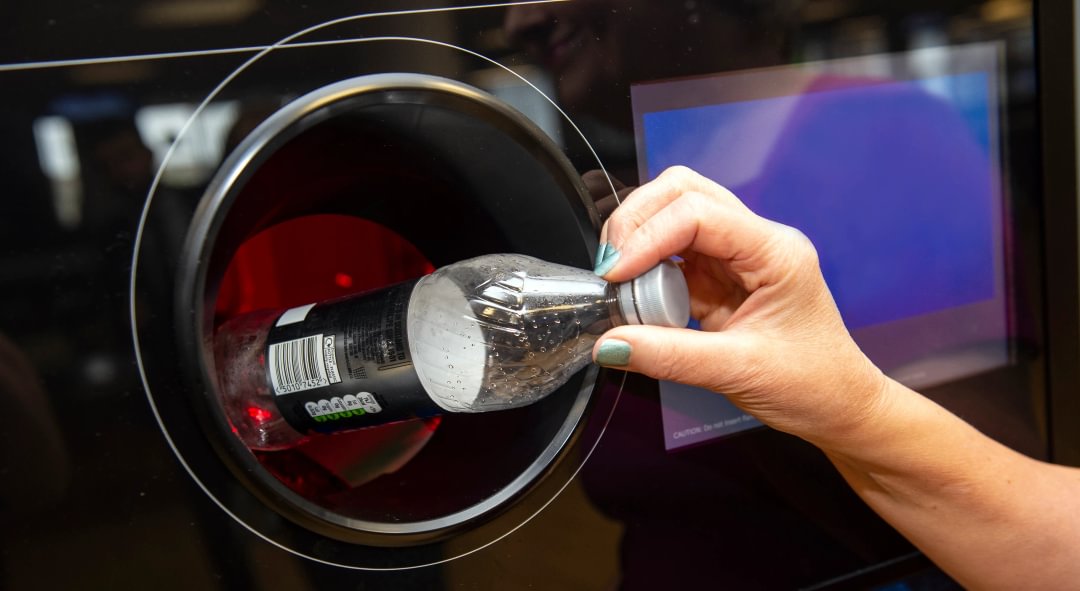
DRS depends on accurate product identification at multiple points across the supply chain. At point of sale, the product must be recognised so the correct deposit can be applied. At return points and reverse vending machines (RVMs), it must be validated before a refund is issued.
The same identification also supports scheme systems, helping deposits and reporting to be reconciled accurately. Each product must therefore be clearly identifiable and validated against the deposit management organisation’s (DMO) product database.
Identification requirements
To meet DRS requirements, in-scope products should:
Carry a dedicated, scheme-specific barcode
Be uniquely identifiable at item level (not just pack level)
Be registered with the DMO before being placed on the market
Meet barcode quality, placement and readability standards
In practice, this means most existing product barcodes will need to be updated for DRS, though some exemptions do apply.
For the DRS in England, Scotland and Northern Ireland, the deposit management organisation is Exchange for Change. On their website you'll find useful resources, be able to register for newsletters and webinars and you'll find the specifications that this article is based on.
Please contact them directly for non-GS1 standard related queries about the scheme, such as clarification on products in scope and exemptions.
The role of GTIN
The Global Trade Item Number (GTIN) underpins unique product identification for DRS.
Acting as the regulation’s ‘scheme return code’, it enables:

- Unique identification of each product
- Correct deposit application at checkout
- Validation against the DMO Article List
- Accurate reconciliation of returned containers
Allocating new GTINs for DRS
Exchange for Change requires that a "dedicated specific barcode be applied to all In-Scope products". For most producers, this key requirement is straightforward - in-scope products should be assigned a new GTIN which is registered and ready before DRS go-live.
This is necessary to:
- Distinguish deposit-bearing products from pre-DRS (legacy) stock
- Ensure deposits are only applied to eligible items
- Prevent financial exposure from unredeemed deposits on legacy products
This aligns with the guiding principles of the GS1 GTIN Management Standard and, specifically the rule on adding or remove certification mark. Producers also need to be aware when a GTIN changes for an item, the GTINs should also change for all its different packaging levels too.
If producers do not assign a new GTIN and barcode to DRS products they may be subject to an additional charge on the standard producer fee. Any such additional charge will be decided by the DMO in 2026, in line with the overall producer fee structure.
When to allocate new GTINs
You should:
Allocate new GTINs in advance of DRS go-live
Register them with the DMO once the product registration portal opens
Align GTIN allocation with packaging redesign and stock planning
Early planning is important, even though DRS-labelled products should not be placed on the market before go-live.
Multipacks: what you need to do
Multipacks introduce additional identification requirements as each container within a multipack must now carry its own barcode and GTIN so that it is individually identifiable and returnable.
This enables containers to be returned one by one and deposits to be refunded correctly.
Because the multipack barcode is typically used at point of sale to apply the total deposit value and individual item barcodes support return, validation and reconciliation, the multipack barcode must be different from the individual item barcodes.
Individual items within a multipack still need to be identified for DRS, even if they are not intended to be sold separately. In these cases, some producers are choosing to allocate a “not for sale” GTIN for the individual item:
- This “not for sale” GTIN is registered in the scheme database, enabling the item to be recognised and accepted at return points, but it is not intended to be used at point of sale
- The multipack outer barcode remains the only GTIN used for point-of-sale transactions
This ensures items can be returned and deposits refunded correctly, without creating issues in retail systems.
Barcode requirements
DRS uses existing GS1 retail barcode standards but applies stricter rules on their use. This means that producers can continue to use the EAN and UPC barcode formats that meet GS1 quality standards, therefore ensuring they can be read throughout the life of the packaging.
Additional specific requirements for the scheme include:
- Placing the barcode on the main label (not on the neck for bottles)
- Not placing barcodes on the top or bottom of the container
- Ensuring placement supports reliable scanning in environments
Practical tips
To prepare for DRS identification requirements:
Review your full product range to identify in-scope items
Plan GTIN allocation alongside packaging and labelling updates
Coordinate across packaging, IT, supply chain and commercial teams
Validate barcode quality and placement early
Consider aligning DRS changes with wider initiatives such as adoption of QR codes powered by GS1
FAQs
The specifications advise that existing barcodes will need to be replaced with a DRS-specific identifier or additional fees are likely to apply. Though some exemptions will be in place for low volume threshold products.
Yes. Each individual container must have its own GTIN and barcode.
No. The outer multipack barcode must be different from the individual item barcodes.
Yes. All in-scope products must be registered with the DMO before being placed on the market.
Some low-volume products may have limited exemptions (for example, from certain labelling requirements), but registration and identification requirements still apply.
Summary
DRS introduces a clear requirement: every deposit-bearing product must be uniquely identifiable and registered.
For most members, this means:
Allocating new GTINs for all in-scope products
Updating barcodes and labels
Ensuring item-level identification, including within multipacks
Planning early will make the transition significantly smoother and reduce the risk of disruption closer to go-live.