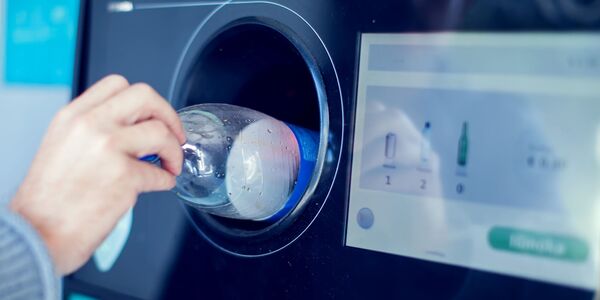
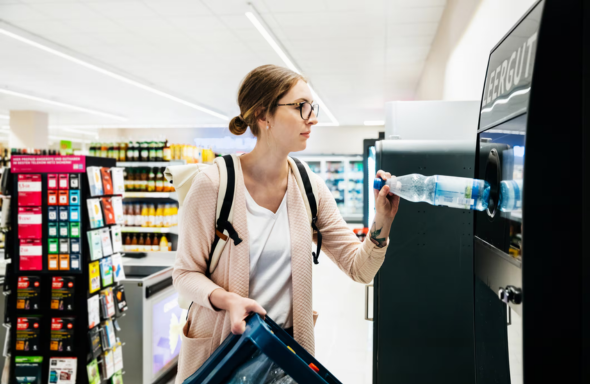
Deposit return schemes (DRS) play a key role in reducing litter, increasing recycling rates and supporting more circular packaging systems.
From 1 October 2027, the UK will introduce a deposit return scheme (DRS) for single‑use plastic, aluminium and steel drinks containers.
The scheme will be operated by Exchange for Change, the not‑for‑profit body appointed to run the system across England, Northern Ireland and Scotland.
Wales will operate a compatible but separate scheme, with glass included in scope from launch.
As DRS becomes a reality across the UK, GS1 standards provide the trusted identification and data sharing foundation needed to ensure containers can be registered, scanned and returned accurately and consistently.
What is a deposit return scheme?
DRS incentivises consumers to return containers by charging a small refundable deposit.
By ensuring high return rates, the scheme helps:
- Increase the quantity and quality of materials collected for recycling
- Improve transparency across packaging supply chains
- Support national and regional circular economy targets
With more than 6.5 billion recyclable drinks containers going unrecycled in the UK each year, the introduction of a standardised return system marks one of the biggest environmental policy shifts in decades.
How GS1 standards enable DRS
GS1 standards ensure containers can be accurately identified, tracked and reconciled across the entire return system.
Identification
Accurate identification underpins the deposit return scheme, ensuring every in‑scope drinks container and location can be consistently recognised across the system.

Global Trade Item Numbers (GTINs)
Uniquely identify each eligible drinks product registered with Exchange for Change.

Global Location Numbers (GLNs)
Identify return points, counting centres, depots and other operational locations.

Serial Shipping Container Codes (SSCCs)
Support the identification of bags and logistics units used within Reverse Vending Machines (RVM) collection systems.
Data capture
Reliable data capture supports the scanning, validation and processing of containers at return points within the deposit return scheme.

Barcodes
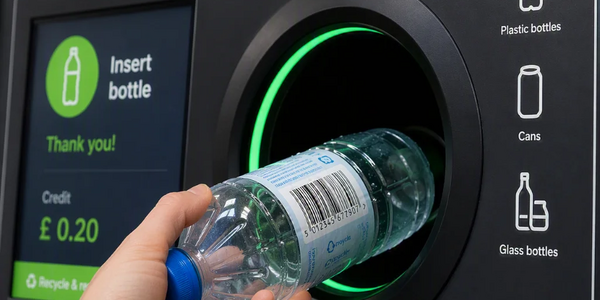
Linear barcodes enable consistent product identification at return points by encoding the Global Trade Item Number (GTIN) registered with the scheme administrator. This allows eligible drinks containers to be recognised within the deposit return system and supports accurate reconciliation of containers placed on the market and returned.

QR codes powered by GS1
QR codes powered by GS1 can carry the same trusted GTIN‑based identification when created in line with GS1 standards. Where supported by the scheme and return infrastructure, they can be used alongside linear barcodes, while also enabling additional digital use cases such as access to recycling information or other product data via GS1 Digital Link.
Data sharing
Effective data sharing allows information to move securely between producers, retailers, operators and the scheme administrator.

Electronic Data Interchange (EDI)
Ensures automated communication of volumes placed on the market and returned.

GS1 Digital Link
Allows QR codes powered by GS1 to connect consumers to return instructions, recycling information and sustainability data.
Together, these standards provide an interoperable foundation for a national scheme spanning producers, retailers, hospitality, logistics providers and recyclers.
What producers, importers and retailers need to do
All businesses placing in‑scope drinks containers on the market will have new obligations, including registration with Exchange for Change, labelling updates and regular reporting.
Retailers will also need to charge deposits, accept returns and refund consumers.
Artwork changes, RVM testing and data readiness should be prioritised now to avoid bottlenecks in 2027.
QR codes powered by GS1 and DRS
QR codes powered by GS1 meet the UK scheme’s requirements when they contain the correct GTIN registered with Exchange for Change.
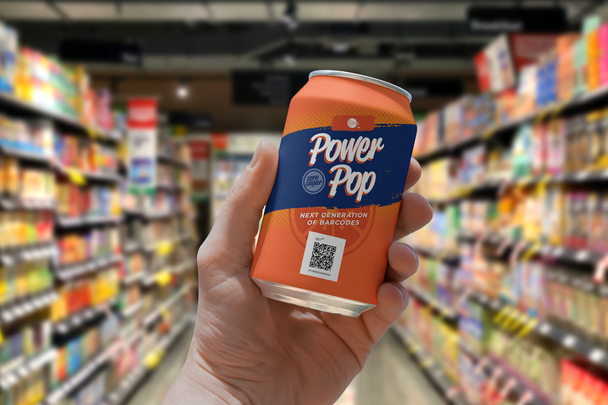
RVMs will be capable of reading both linear barcodes and 2D codes, meaning producers can:
- Prepare for the UK’s 2027 scheme
- Transition to next-generation barcodes – QR codes powered by GS1
- Use a single on‑pack symbol for POS, DRS, consumer information and circularity initiatives
This approach reduces label complexity and supports future regulatory requirements across digital product information, including DPP and EUDR.
How we can help
Our team supports businesses preparing for DRS through:
- Guidance on GTIN allocation, QR codes powered by GS1 and GS1 Digital Link
- Advice on barcode quality, placement and testing for RVM performance
- Tailored support for producers, importers, retailers and solution providers
For more detailed support and the latest updates, get in touch.
Useful resources