April 17, 2026 Industry news
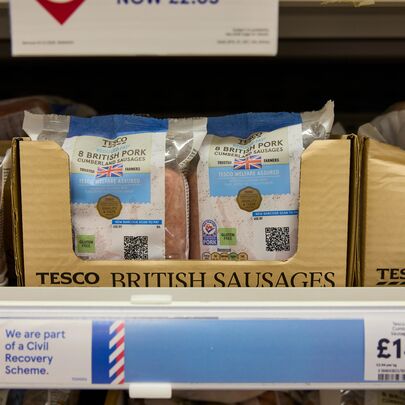
Tesco has become the first UK supermarket to transition an entire product range to QR codes powered by GS1, replacing traditional linear barcodes across its own‑label core sausage range.
While the change will be largely invisible to shoppers at the checkout, it represents a significant step in how product data is managed behind the scenes. By moving beyond pilots and adopting the next generation of barcodes across a live range, Tesco has shown how QR codes powered by GS1 can be embedded into day‑to‑day retail operations.
The move follows two years of industry pilots involving GS1 UK and a range of retail and brand partners. Those pilots focused on testing how QR codes powered by GS1 could work safely and reliably in real retail environments. Tesco’s decision now applies that learning in practice, marking a shift from exploration to implementation.
Building on what already works
For more than 50 years, linear barcodes have provided the backbone of global retail. They enable products to be uniquely identified, scanned reliably at the till and managed consistently across supply chains. That foundation remains essential and it continues to do its job well.
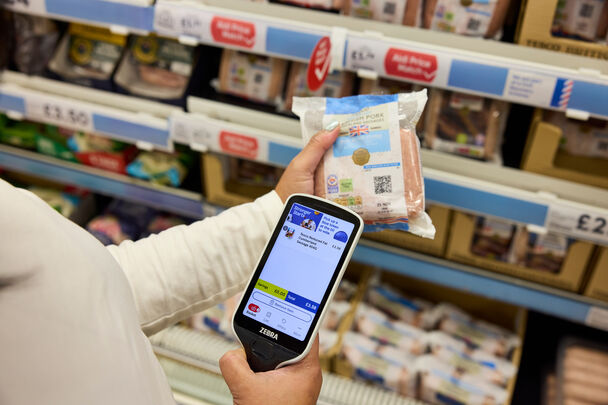
What has changed is the context around it. Expectations around transparency, data accuracy and responsiveness have grown, while the space available on physical packaging has not. Retailers are now expected to manage far richer product information, from expiry dates and batch data to sourcing, sustainability and regulatory requirements.
QR codes powered by GS1 were identified by retailers, brands and regulators as a way to meet those demands without disrupting existing systems. Linked to GS1 identifiers such as Global Trade Item Numbers (GTINs), they allow products to connect to trusted digital information that can be updated in real time, while still scanning at the checkout.
Rather than replacing the barcode, this approach allows it to evolve.
Operational foundations come first
Tesco’s transition is not about novelty or surface‑level change. For retailers, the primary value of QR codes powered by GS1 sits in the operational foundations they enable.
By capturing batch and date information more effectively, retailers can gain greater visibility of products within their stores. This supports more accurate inventory management, improved stock rotation and reduced food waste.
In the event of a product recall, QR codes powered by GS1 also enable far greater precision. Instead of withdrawing entire product lines, retailers can identify and manage specific affected batches, limiting disruption while improving availability and safety.
Clearer, more accessible product information for shoppers sits on top of these foundations. As more retailers and brands adopt QR codes powered by GS1, this opens up valuable opportunities for shoppers to access richer, more up‑to‑date information about the products they buy, using their smartphones, without changing how they shop or pay in store.
Over time, this also has the potential to support new digital tools and services that help shoppers make more informed choices and manage the products they buy more effectively at home.
From pilots to everyday retail
Tesco’s move builds directly on the learning from earlier pilots.
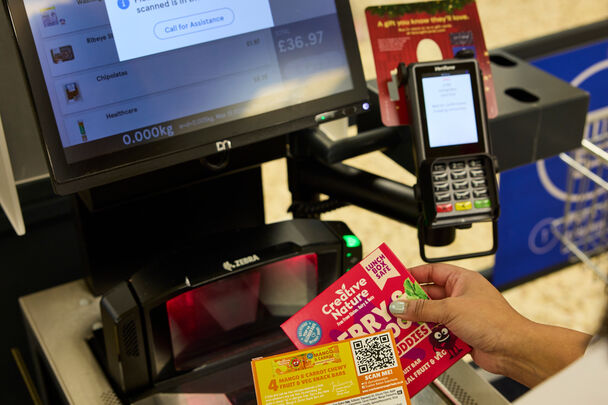
Over the past two years, GS1 UK has worked closely with members to test how QR codes powered by GS1 perform in real retail settings, ensuring they can be introduced in a way that is reliable, interoperable and scalable.
Those pilots answered important questions around feasibility. Tesco’s transition answers a different one: how the next generation of barcodes can become part of normal retail operations.
This is often how meaningful change takes place in retail. It is shaped collaboratively, validated through testing and then adopted quietly, until it becomes part of how the industry works rather than something that stands apart from it.
What this means for industry
Tesco’s decision matters not because it forces others to act, but because it sets a clear precedent.
It provides a practical example of how QR codes powered by GS1 can be adopted across a live product range using existing standards and infrastructure. It also reinforces the direction the industry has been moving towards for some time.
For many businesses, particularly smaller brands, the challenge is not understanding where retail is heading, but knowing how best to prepare in a practical and proportionate way as expectations around data, transparency and digital connectivity continue to grow.

Tesco moving to QR codes powered by GS1 across an entire range marks a significant step forward for UK retail. It shows how the next generation of barcodes can support a more connected, transparent future. We hope this progress encourages others to follow Tesco’s lead so that consumers and businesses alike can benefit from richer, more trusted product information.”
Anne Godfrey
CEO of GS1 UK
A quiet but significant shift
The move towards QR codes powered by GS1 forms part of a wider, industry‑led transition. GS1 is working with retailers and manufacturers to support the shift to QR codes powered by GS1, with adoption already under way and being managed carefully and collaboratively across the industry.
Linear barcodes will continue to play an important role during the transition period. Tesco’s move shows how GS1 standards can evolve in response to changing demands, providing continuity where it matters while supporting the next generation of product identification.
It is not a loud or sudden change. But it is a meaningful one, and it demonstrates how retail often raises its game by strengthening the foundations the industry already relies on.