May 07, 2026 Industry news
When I speak with manufacturers who are preparing to adopt GS1 Digital Link and 2D barcodes, most have already done their homework. They understand the regulatory direction of travel, recognise that the industry is shifting and want to take a practical first step rather than wait to be forced into change.
I usually start with one simple question. What do you actually want the code to do?
That question often reframes the conversation. Because the answer determines everything that follows, from the size and placement of the QR code, to the data it needs to carry, the printing technology required and whether it makes sense to begin with a pre-printed code or move straight to inline printing.
There is no one size fits all answer. But there is a clear framework. Having worked with manufacturers across food, beverage and consumer goods, I have seen what separates pilots that create long term value from those that result in unnecessary cost and rework.
Start with the use case, not the technology
When organisations ask where to begin, I usually turn the question back to them. What problem are you trying to solve?
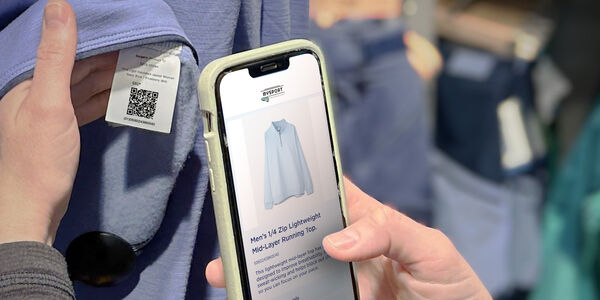
For some manufacturers the driver is regulatory, such as tax stamps, anti-counterfeiting requirements, or preparation for initiatives like the EU Digital Product Passport. Others are focused on opportunity, using QR codes powered by GS1 Digital Link to provide richer and more flexible digital experiences when a product is scanned.
This distinction matters because it drives the underlying data requirements.
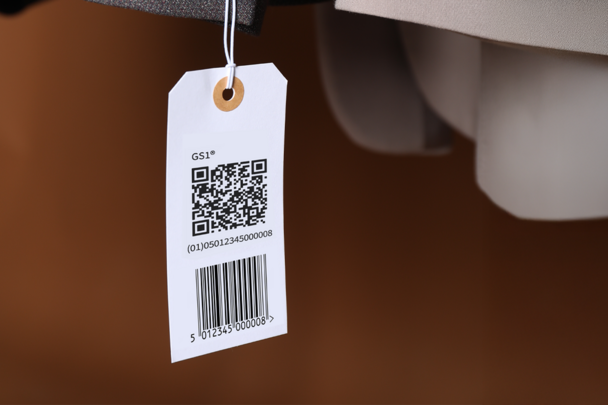
Your use case determines what information must be carried directly in the QR code so it can be accessed offline, what information can be resolved via the cloud and which identifiers such as batch or serial numbers are needed to link the two.
Once those decisions are clear, defining the QR code itself becomes much more straightforward. From there, informed choices can be made about packaging design, artwork and production.
An interconnected system that is often underestimated
Where I see projects struggle is when the QR code is treated as a standalone decision. A code is generated, added to packaging and assumed to be complete. In reality, a variable QR code sits at the centre of three tightly connected systems.
First is packaging and artwork. This includes questions such as whether there is a clean background for the code, whether the print area is large enough and whether the quiet zone requirements are being respected.
Second is data and workflow. The right data needs to be available at the moment of printing and systems such as ERP platforms must be able to pass batch or serial information to the production line reliably and in real time.
Third are the physical conditions of the production line. Printing technology, product movement and line stability all affect the level of precision that can realistically be maintained.
If these elements are not aligned, pilots tend to fail for reasons that have little to do with the QR code itself. One manufacturer completed a full validation cycle using laser printing, only to discover later that vibrations from nearby equipment were subtly degrading print quality. The issue was environmental rather than technical and only became visible when the system was viewed as a whole.
When pre-printed QR codes are the right starting point
Pre-printed QR codes are sometimes seen as a compromise, or a temporary measure for manufacturers that are not ready for inline printing. In practice, they can be the right strategic choice.
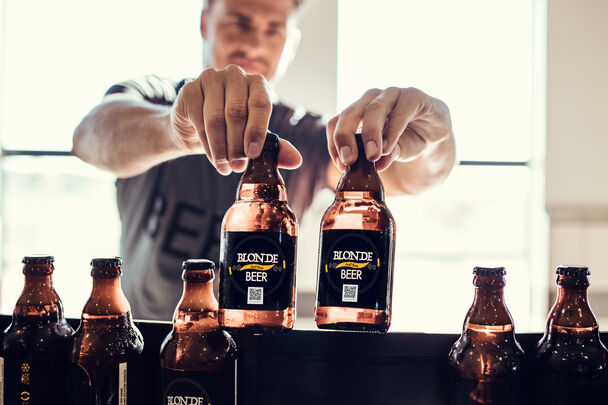
Pre-printing makes sense where current production lines cannot yet deliver the required quality or consistency for variable QR codes at speed. More importantly, when artwork is designed correctly from the outset, pre-printing can lay the groundwork for a future move to inline printing.
That means sizing the QR code appropriately, reserving a clear print window and avoiding complex or mixed backgrounds. When those principles are applied, the later transition to inline printing can be achieved by removing the pre-printed element and activating inline printing in its place, without redesigning packaging or repeating validation work.
That is not a compromise. It is deliberate and cost-effective sequencing.
When organisations think they are ready but are not
Most manufacturers are not resistant to change. The challenge is often hidden constraints. A team selects a SKU, generates a variable QR code and launches a pilot, only to encounter friction once production begins.
Common issues include unclear print areas, artwork overlapping the print zone, printers struggling to maintain consistent distance, or batch data sitting in systems that do not communicate effectively with the line.
When several of these issues appear together, projects can stall and lead to the wrong conclusion that inline printing is not viable. In reality, the limitation is rarely the QR code itself. It is misalignment between packaging, data and production environments.
When those elements are brought into sync, inline variable QR codes can support stronger traceability, more efficient operations and greater flexibility closer to the point of production.
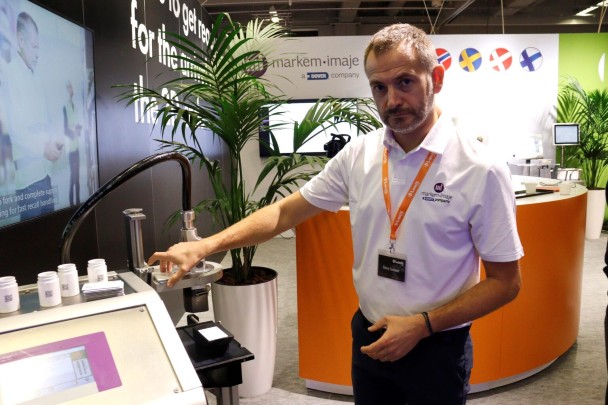
Remy Fontanet, industry specialist at GS1 UK partner Markem Imaje
Making the right next step
The real question is not whether pre-printed or variable QR codes are better in isolation.
It is how to take the most valuable next step based on your current use case, packaging constraints, production environment and data infrastructure.
When those factors are understood, the right starting point becomes clear.
More importantly, the route from today’s reality to a more flexible and future ready approach becomes visible, manageable and significantly less costly.