March 26, 2026 Industry news
A quiet but significant shift is taking place across retail. For many years QR codes were treated as a useful add on, often placed at the edge of a pack with the hope that customers might scan them.
That era has passed. QR codes are steadily becoming the main way brands share information, meet new expectations and build trust with the people who buy their products. What is driving the change is not technology alone but the growing need for clarity, flexibility and transparency in a world that demands more from every pack.
During IRX Digital Growth Week, GS1 UK’s Lorna Leaver and Benjy Owusu-Daaku explored this change in an IRX Digital Webinar. Their message was clear: the next phase of product information will be shaped by the brands that understand how QR codes powered by GS1 can support both the consumer experience and the operational realities that sit behind it.
Consumers want clarity and packaging alone cannot keep up
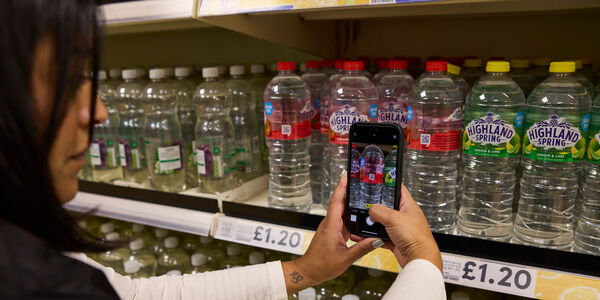
As shoppers become more curious and more informed, they expect immediate answers to questions about allergens, sustainability, provenance, nutrition and authenticity. That expectation has grown stronger as the mobile phone has become the natural tool for verifying information at the shelf.
Benjy captured this shift when he explained that consumers have moved beyond passively reading labels. In his words, they are “expecting more information at the point of sale to make decisions”. He added that brands that cannot provide this are “at risk of losing their competitive edge”. It is a simple but accurate observation. The moment of decision has become a moment of verification.
This has created a pressure that physical packaging can no longer absorb on its own. The QR code has become the bridge, not because brands pushed it, but because consumers adopted scanning as part of their normal behaviour.
Regulation is pushing information requirements beyond the limit of the pack
Consumer expectations are only part of the picture.
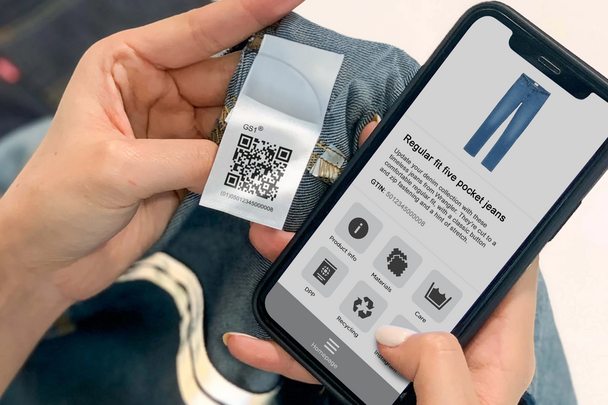
The regulatory landscape is becoming increasingly demanding, whether through digital product passports, deposit return schemes, extended producer responsibility or detailed disclosure requirements. Benjy described this environment as one where “pressure is coming from all corners of the world” and where businesses need a reliable way to share information that may evolve over time.
In this context, QR codes powered by GS1 offer something packaging cannot. They provide the ability to adapt information without constant redesigns. They support structured, trusted data that suits both legislative needs and retailer systems. Most importantly, they offer a route through growing complexity without adding noise for consumers.
Regulation is pushing information requirements beyond the limit of the pack
Many people have had disappointing experiences with QR codes in the past. Lorna noted that a typical code often “just takes you to a homepage or a link that no longer works”. It is a limitation that has undermined trust.
QR codes powered by GS1 do not behave this way. They use GS1 Digital Link, which connects the GTIN to a set of structured destinations that can be updated over time. The code still works at the till. It still ties into the systems brands rely on. What changes is the flexibility and reliability of the content behind the scan.
Lorna described this as a way of “unlocking more from something you are already doing”. She also pointed out that many brands are closer to readiness than they realise, remarking that if a QR code already appears on pack, “you are probably ninety per cent of the way there”.
It is a shift in mindset as much as a shift in technology.
Why QR codes powered by GS1 are fundamentally different
Many people have had disappointing experiences with QR codes in the past. Lorna noted that a typical code often “just takes you to a homepage or a link that no longer works”. It is a limitation that has undermined trust.
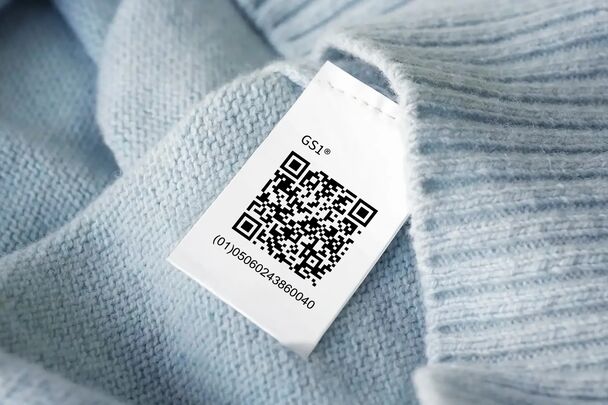
QR codes powered by GS1 do not behave this way. They use GS1 Digital Link, which connects the GTIN to a set of structured destinations that can be updated over time. The code still works at the till. It still ties into the systems brands rely on. What changes is the flexibility and reliability of the content behind the scan.
Lorna described this as a way of “unlocking more from something you are already doing”. She also pointed out that many brands are closer to readiness than they realise, remarking that if a QR code already appears on pack, “you are probably ninety per cent of the way there”.
It is a shift in mindset as much as a shift in technology.
Real use cases show how broad the benefits have become
The examples shared during the session demonstrated just how varied the value of QR codes powered by GS1 has become.
Unilever are using the technology to support visually impaired consumers by linking to accessible product information. Engagement rose significantly because the value was clear. As Benjy observed, “when a consumer need is identified and solved, people will engage”.
Tesco are using QR codes with embedded expiry information to prevent out of date products being sold. This reduced operational risk, protected shoppers and avoided costly fines in the process.
Other brands have used the technology to replace printed leaflets, simplify recycling guidance, support sustainability reward schemes or present curated content in a clear, user-friendly way.
Each example reflects a simple truth. The most successful implementations begin with a specific need rather than an abstract ambition.
Adoption begins with people and data rather than packaging
Lorna stressed that preparing for QR codes powered by GS1 is not only a packaging task. It touches almost every part of the organisation. She explained that “the barcode bit is probably the final piece”. The earlier work involves understanding where product data sits, how consistent it is and how well different teams can support the use cases the business chooses to prioritise.
This focus on alignment is one of the clearest lessons from early adopters. The organisations making the fastest progress are those that started with a small number of well-chosen products, refined their approach and then scaled once the value was proven.
What businesses should be doing next
With UK retailers now preparing their point-of-sale systems for QR codes powered by GS1, this is the right moment to begin planning.
Brands should assess their product data, engage their packaging and printing partners, identify use cases that genuinely matter and design a simple, intuitive post-scan experience.
This is not a rapid overhaul but a considered progression. It is a shift that can begin small and grow with confidence.
A familiar symbol with a much bigger role
QR codes have existed for decades, but their purpose has changed. They are no longer shortcuts to isolated webpages. They are becoming a core mechanism for product transparency, regulatory compliance and richer consumer engagement.
As Benjy explained, the real opportunity lies in getting closer to the end consumer in a way that feels natural and useful. As Lorna reminded the audience, organisations already have much of what they need. The task now is to make the most of it.
For GS1 UK members, this transition is not simply a packaging update. It is a strategic opportunity to strengthen trust, improve accuracy and prepare for the next generation of digital product information.