
Clarifying the difference
There are two ways to encode GS1 data in a QR code.
A QR code is simply the data carrier (the symbol). What matters is how the data within it is structured. If this is not done correctly, the barcode may not support retail use, supply chain processes, or future regulatory requirements.
Many solution providers and brands are using the term “GS1 QR code” incorrectly - or assume that any QR code containing GS1 data is equivalent to GS1 Digital Link. This is not the case.
There are two distinct approaches:
GS1 QR code (element string syntax)

QR code powered by GS1 (Digital Link URI syntax)
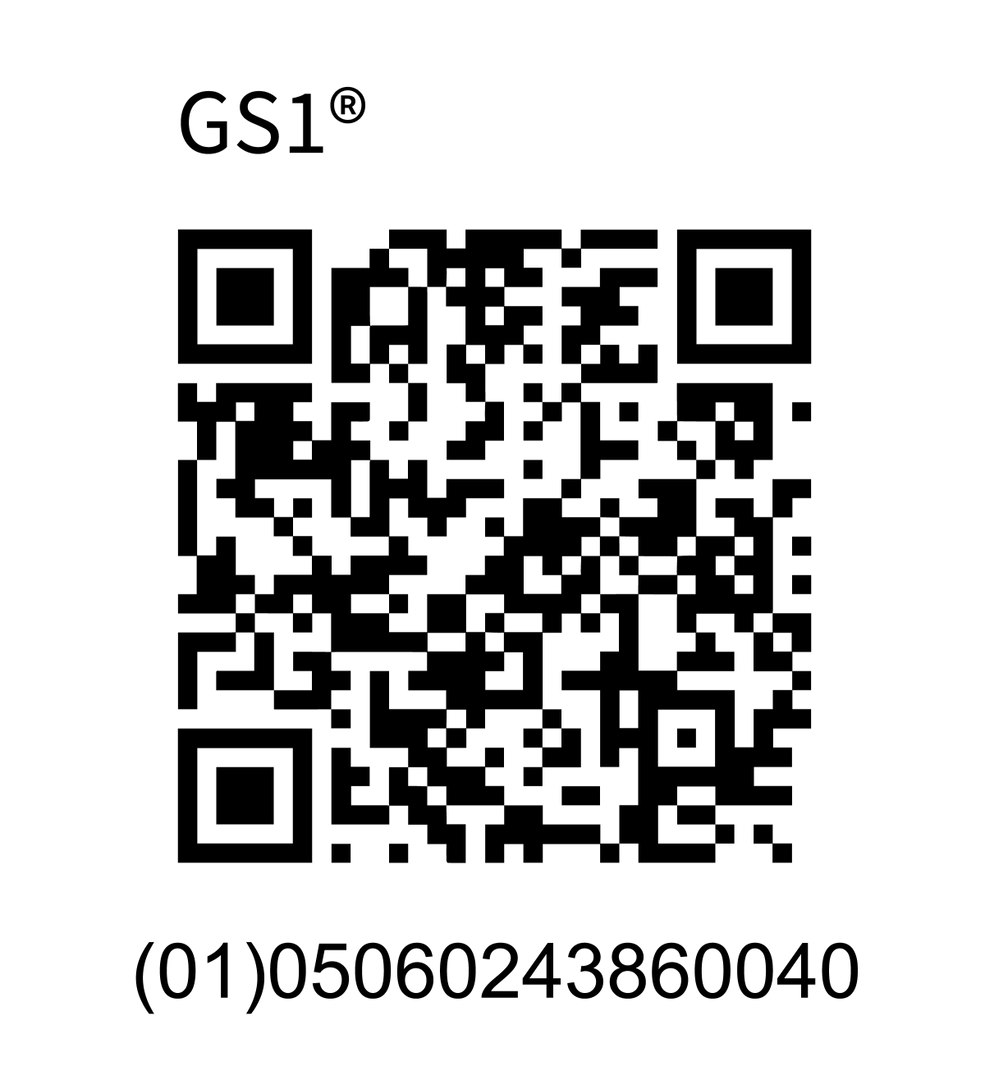
They may look identical, but they behave very differently.
A GS1 QR code uses GS1 element string syntax, which encodes Application Identifiers (AIs), for example:
(01)05060243860040(17)240401(8200)https://id.gs1.org(10)batch1
This format:
- Is structured for machine interpretation
- Is widely used across supply chains (e.g. GS1 DataMatrix)
- Does not use a web-native structure
GS1 element string syntax is designed for structured data capture, not for web connectivity.
A QR code powered by GS1 uses a GS1 Digital Link URI, for example:
https://brand.com/01/09506000134352/17/261231
This format:
- Encodes the same GS1 identifiers
- Uses a standardised web URI structure
- Can be interpreted by both scanners and web systems
GS1 Digital Link converts GS1 identifiers into a structured web address that supports both identification and online access.
Why this distinction matters
Although both approaches encode GS1 identifiers, only QR codes using Digital Link combine identification and web access in a single standardised structure:
A common misunderstanding is assuming that:
“If a QR code contains GS1 data, it must be GS1 Digital Link”
- A GS1 QR code (element string) is not the same as Digital Link
- A QR code with a URL does not necessarily use Digital Link
- Only a QR code encoded with GS1 Digital Link URI syntax meets the intended standard for modern use cases
What you should implement
To align with GS1 standards and future retail requirements:
Use:
QR codes powered by GS1
A GTIN at minimum (other GS1 identifiers can be used dependant on use case)
GS1 Digital Link URI syntax rules
Avoid:
Using GS1 element string QR codes for consumer-facing or multi-use scenarios
Assuming legacy formats will meet future needs
Referring generically to "GS1 QR codes" without defining the syntax
Final takeaway
- GS1 QR code (element string) = structured data carrier
- QR code powered by GS1 (Digital Link) = structured data + web connectivity
Whilst both use QR codes, due to different encoding the two symbols have two completely different capabilities. Only the latter delivers the full value of GS1 standards in a digital and connected world.

QR code generator
GS1 UK members can generate QR codes today: