December 23, 2025 Industry news
Artificial intelligence is becoming part of everyday business, shaping how products are discovered, assessed and exchanged across supply chains.
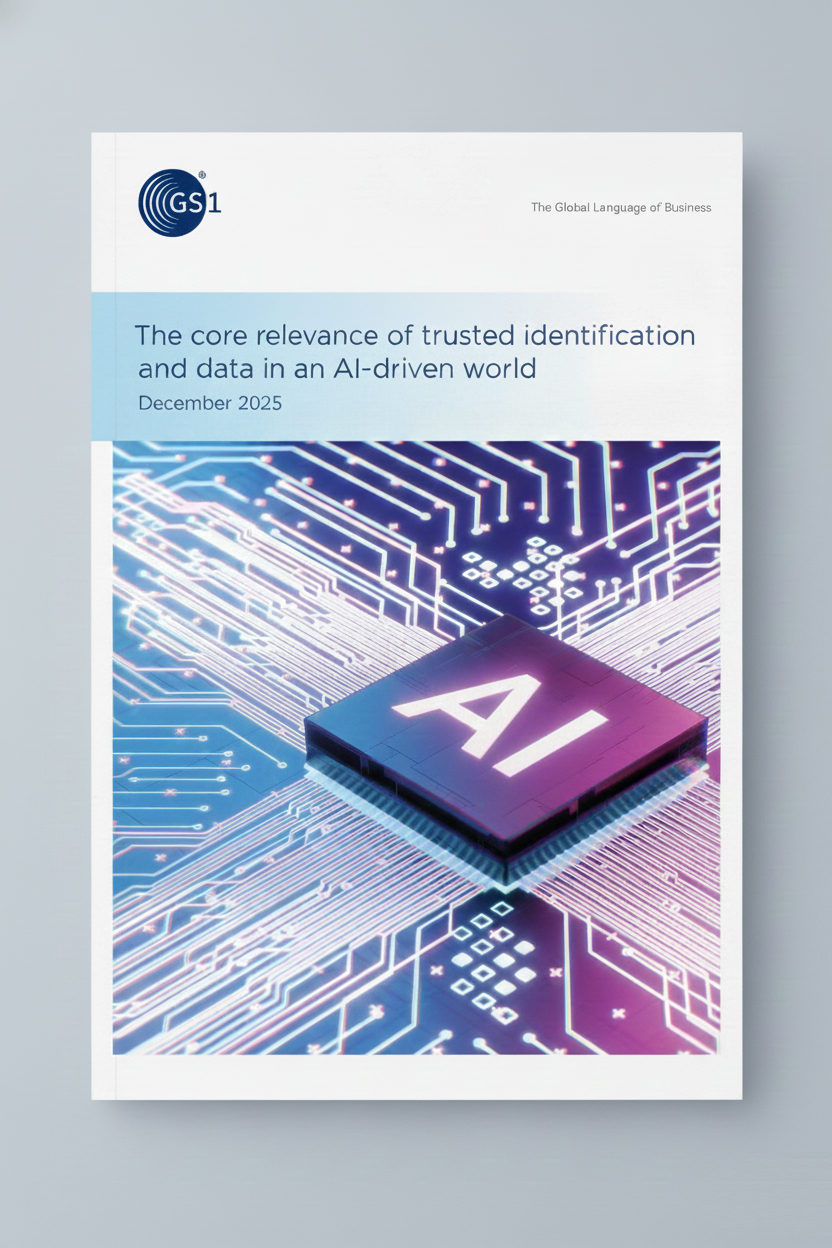
As these tools develop, they are changing expectations around accuracy, transparency and the way information flows between organisations. GS1’s new global paper, The core relevance of trusted identification and data in an AI‑driven world, looks at what this means for industry and why the foundations we build now will influence how well AI can support businesses in the years ahead.
For more than five decades, GS1 standards have provided a shared way to identify products, locations and assets. The report makes clear that these same principles are becoming even more important as AI systems become more widely used. Reliable identification and well‑structured data help ensure that digital tools return information that is consistent with what a product actually is. Without that grounding, AI outputs can become fragmented or misleading, reducing trust for both businesses and consumers.
Shifting expectations in consumer engagement
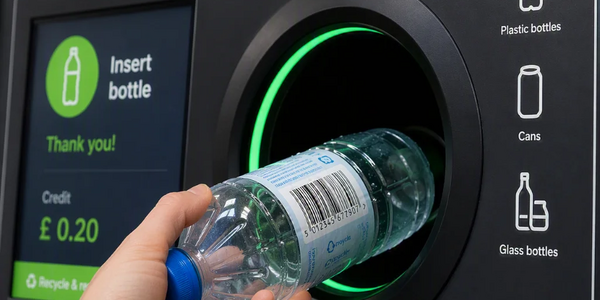
The report highlights a growing expectation among consumers for clear, accessible and accurate product information. People increasingly look for details on where a product comes from, how to use it safely and how to dispose of it responsibly.

As AI models become part of these interactions, the quality of the information they draw from becomes critical.
When a product is linked to a unique, globally recognised identifier, AI systems can access the right information at the right moment. This helps ensure that descriptions, attributes and instructions remain accurate wherever a consumer chooses to look. It also supports a more consistent experience across retail channels, search environments and emerging AI assistants.
This is not simply about efficiency but about trust. People are far more likely to rely on digital tools when the information they provide is dependable. Standards make that possible by giving every product a stable and verified identity that AI can interpret correctly.
Regulatory demands increasing
Governments around the world continue to tighten requirements on product data, covering issues such as safety, sustainability and traceability. The report describes how much of this regulatory information now needs to be made available on or through the product’s packaging.
AI is also beginning to play a role in how regulators monitor compliance. Automated tools can scan information at scale, check for inconsistencies and compare claims with trusted data sources. This makes the accuracy and structure of product information even more important. Businesses that use GS1 standards to organise and publish their data can present it in a way that is easier for regulators to understand and verify, reducing the risk of delays or discrepancies.
Interoperability also matters. Many organisations operate across borders and the same product may need to meet different regulatory expectations in different markets. A shared data language helps companies avoid duplication and maintain consistency across regions.
Packaging is becoming a digital access point
One key theme that stands out is the shift towards packaging as a gateway to digital information.

Instead of adding multiple proprietary codes to pack, businesses can use QR codes powered by GS1 to connect people directly to verified product data. A single code can take users to origin information, instructions, certifications or recycling guidance, while also supporting store operations and regulatory checks.
This approach removes the need for separate systems for each use case and reduces complexity for manufacturers and retailers. It also supports AI‑enabled experiences. When information is tied to one interoperable code, digital tools can retrieve accurate product details without conflicting or duplicated data sources. In a landscape where AI models increasingly interpret packaging as a doorway to information, consistency becomes essential.
How standards support emerging AI models
The report outlines several ways in which GS1 standards can help AI systems provide better outcomes for industry:
- Supporting systems that rely on external data: retrieval‑augmented generation and other techniques benefit from access to trusted, up‑to‑date product data. GS1‑aligned information provides that anchor
- Improving the quality of model training: sector‑specific AI models need structured and reliable datasets. GS1 data helps reduce the risk of models learning from inaccurate or inconsistent sources
- Enabling more accurate search and comparison: with GS1 identifiers, AI can distinguish between similar products and return results that match real‑world attributes, rather than relying on guesswork or pattern matching
- Building clearer relationships between data points: using GS1 Web Vocabulary, product information can be expressed in a way that supports knowledge graphs, making AI reasoning more transparent and easier to trace
- Verifying claims where accuracy matters: by linking attributes such as allergens, certifications or provenance to verifiable credentials, businesses can help AI tools confirm information rather than infer it
These capabilities make it easier for organisations to adopt AI in areas where precision, trust and transparency are essential.
Avoiding fragmentation
A key warning in the report is the risk of fragmentation if companies or regions adopt their own closed approaches to product identification and data management.

Fragmentation increases costs, slows innovation and makes it harder for AI systems to deliver accurate results. By contrast, a shared, open and global system helps ensure that data flows smoothly across borders, industries and digital environments.
This is particularly important as global trade becomes more digital and sustainability reporting becomes more detailed.
The more systems can speak the same language, the easier it is for businesses to meet expectations around transparency and demonstrate progress.
Preparing for the future
As AI becomes more deeply embedded in commerce, the quality and consistency of product data will matter more than ever. Businesses that invest in trusted identification, interoperable data and clear digital links from packaging will be better positioned to use AI tools effectively and meet the expectations of consumers and regulators.
GS1 UK will continue to support members as they strengthen their data foundations, adopt QR codes powered by GS1 and prepare for new forms of AI‑enabled engagement and compliance.