January 27, 2026 Guest opinion piece
Getting your beauty brand onto UK retail shelves is a big milestone and an even bigger opportunity. But here’s the truth: retail buyers are approached by dozens of brands every month and most of those pitches fall flat. Why? Because they focus on what the brand wants to say rather than what the buyer needs to hear.
If you're gearing up to approach buyers in 2026, there are a few key things you need to know and a few common mistakes you’ll want to avoid. Whether you're new to retail or scaling up from a few indie stockists, this checklist will help you prepare with confidence.
Understand what buyers are actually looking for in 2026
Retail buyers are under constant pressure to deliver products that aren’t just exciting, but also commercially sound, aligned with shopper trends and category-relevant. In 2026, their expectations are higher and more data-driven than ever.

To position your offer effectively, zoom out and look beyond your own category, paying attention to wider retail trends, such as how wellness is expanding across aisles, what’s being prioritised in-store vs online and how cross-category shopping across beauty/wellness/skin and food is shaping product discovery for customers.
If you're a skincare brand, what can you learn from how wellness snacks are being positioned? If you're in haircare, how are fragrance brands elevating their in-store presence with storytelling and display?
Retail is increasingly interconnected and the best pitches show awareness of that wider ecosystem.
Build a strong buyer-ready toolkit
Securing a meeting is only half the battle. Once you have secured a meeting, you must come prepared with a comprehensive toolkit that reflects professionalism, clarity and retail-readiness. Your essentials should include:
- Your product is in the correct retail-ready packaging
- Retail pitch deck – clear, visual, covering your brand story, traction, category fit, differentiation and support strategy
- Sell sheet – a one-pager with SKU details, pricing, case size, MOQ
- Retailer-specific insights – customised messaging that shows how you align with their customer and commercial goals
- Data and proof points – sales performance, customer reviews, velocity in similar retailers and marketing ROI
Many founders focus too much on the “why” behind their brand and not enough on the commercial how. If you're not sure how to strike that balance, the T.R.U.T.H.S Framework breaks down exactly what buyers look for in a pitch.
Smart ways to get in front of buyers
Getting noticed by buyers takes more than sending a cold email and hoping for the best. In 2026, the most successful brands are using multiple touchpoints to build awareness and trust.
Trade shows and discovery events still matter—especially those spotlighting emerging brands. But don’t overlook lower-lift routes: B2B platforms, buyer-intro consultants and a polished online presence all count.
And yes, buyers do stalk your socials. If your last post was in 2022, it’s time to give your brand a digital refresh!
Practice and perfect your pitch
This isn’t the time to wing it. Pitching to a retailer isn’t about selling the dream; it’s about proving your product will sell through and demonstrating how you will partner with them.
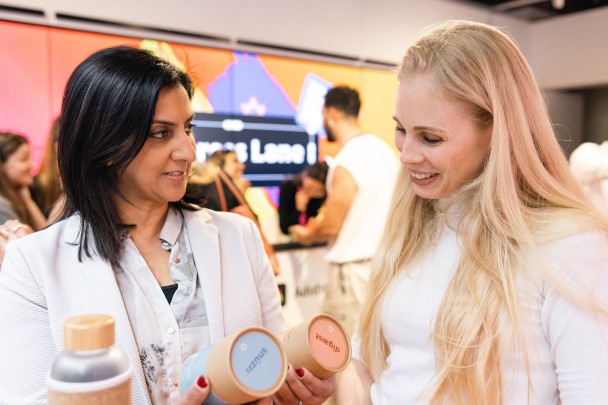
You’ll want to confidently address questions like:
- What are your current sales (online and/or in other retailers)?
- Who is your customer and how do they overlap with ours?
- What’s your pricing structure and trade margin?
- How will you support sell-through (marketing, education, in-store support)?
- What’s your supply chain capacity and lead time?
The more you anticipate their questions, speak their language and answer with clarity, the more confident they'll feel about listing your brand.
If you're not sure how to frame your answers, there's a helpful structure from Retail Huddle called the T.R.U.T.H.S Framework. It’s basically a cheat sheet for saying exactly what buyers want to hear (without the fluff).
Think beyond the pitch: are you operationally retail-ready?
Even the most compelling pitch can fall apart if a buyer senses operational red flags. They want to work with brands that treat retail like a serious business partnership, not just a sales channel.
Ask yourself what you need change in your business to be retail-ready?
- Can you handle PO fulfilment, warehousing and returns?
- Are your barcodes, packaging and ingredients compliant with UK/EU regulations?
- Are you prepared to negotiate on commercial terms, such as marketing contributions or payment terms?
- Do you have a plan to drive sell-through (i.e., so your product doesn’t just sit on the shelf)?
If the answer is no to any of these, don’t panic, but do plan. Getting pitch-ready also means building infrastructure that earns the buyer’s trust long after the meeting.
Retail buyers want products they can trust, from brands that are ready to deliver.
Final thought: pitching is a skill, not just a moment
Getting your product in front of a buyer is a big step, but what you do with that moment is what really counts.

Ami Rabheru, retail strategist at Retail Huddle
Retail pitching isn’t just about passion or storytelling—it’s about preparation, positioning and understanding the buyer’s world. When you know what they’re looking for, what makes them hesitate and how to speak their language, you shift from being just another brand to a serious contender.
Whether your goal this year is to land your first UK retailer or your next big stockist, start now.
Polish your pitch, do your research and focus on building real relationships.
Ready to pitch like a pro? Download your copy of Retail Huddle's Ultimate Guide to Pitching to Retail Buyers, your go-to resource for creating a winning pitch.