December 01, 2025 Guest opinion piece
In October 2027, the UK Government will introduce the deposit return scheme (DRS) across England, Northern Ireland and Scotland. This marks a major step towards a more circular economy. The scheme aims to boost recycling rates and reduce litter by placing a small, refundable deposit on eligible drinks containers.
While the environmental goal is clear, the data and supply chain implications for drinks producers, distributors and retailers are significant. Under DRS, any organisation placing in-scope drink containers on the market must capture, manage and share additional data with supply chain partners and the deposit management organisation (DMO) overseeing the scheme.
What the DRS means for businesses
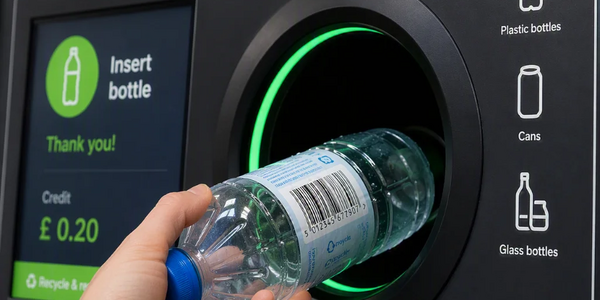
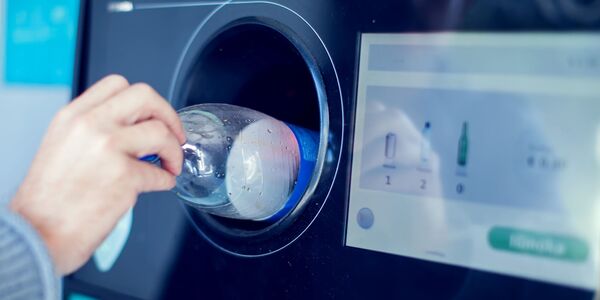
The scheme applies to single-use drinks containers such as plastic bottles and metal cans between 150ml and three litres. When consumers buy an eligible drink, they pay a deposit, which they reclaim when the empty container is returned via an approved collection point.
For the drinks industry, this introduces new reporting and compliance requirements. Producers, importers, distributors and retailers will need to:
- Register products with the DMO
- Ensure containers carry approved DRS labelling or identifiers such as barcodes or QR codes powered by GS1
- Share information on deposit values, container types, volumes sold and returns through trading and reporting systems
- Reconcile deposit charges, refunds and financial flows through accurate, auditable data exchange
The scheme is part of wider extended producer responsibility (EPR) legislation, which shifts lifecycle accountability to producers. Harmonisation across UK nations will be critical. England and Northern Ireland exclude glass, Wales includes it, and Scotland will align with the UK DMO. Targets will phase in over time, starting at 70 per cent collection in year one and rising to 90 per cent by year three.
Targets will phase in over time, starting at 70 per cent collection in year one and rising to 90 per cent by year three.

The role of EDI in meeting DRS obligations
To meet these requirements, businesses will need to strengthen their digital supply chain capabilities.
Electronic data interchange (EDI), the automated exchange of structured business data between partners, will be a key enabler.
EDI messaging can help organisations:
- Share DRS-related data automatically with trading partners, including deposit amounts, container identifiers and scheme participation status
- Integrate with DMO reporting systems for smooth reconciliation of deposits and refunds
- Maintain data consistency across multiple partners and systems
- Reduce manual errors and provide audit trails for compliance
Existing EDI standards such as GS1 EANCOM, GS1 XML and EDIFACT can be extended to include new DRS-specific fields. For example, deposit value, DRS item flag or container type.
Message types such as INVOIC, ORDERS, DESADV and RECADV will carry new attributes to reflect DRS participation and deposit tracking.
Preparing early will help businesses avoid last-minute system changes and ensure supply chain data is ready for seamless DRS reporting.
GS1 standards at the core of DRS compliance
GS1 standards will underpin the data accuracy, interoperability and traceability essential for compliance and smooth operations across the extended supply chain. These include:
- GTIN (Global Trade Item Number) for uniquely identifying containers
- GLN (Global Location Number) for identifying sites and collection points
- QR codes powered by GS1 for enabling richer data, recycling instructions and consumer engagement
- SSCC (Serial Shipping Container Code) for tagging reverse vending machine bags and ensuring traceability
GS1 UK also highlights that these standards will help prevent fraud, ensure accurate deposit reconciliation and support future-proofed systems as DRS evolves.
How AdvanceFirst Technologies can help
At AdvanceFirst Technologies (AFT), now part of PipeChain AB, we specialise in helping organisations achieve high levels of supply chain digitalisation through managed EDI services. Our experience in retail and grocery, combined with GS1 accreditation and proven integration expertise, means we can provide practical, scalable solutions for businesses preparing for DRS.

Whether you have an established EDI programme or are starting from scratch, we can:
- Assess your current digital readiness and data flows
- Extend existing EDI messages to accommodate new DRS data fields
- Provide full managed service support to integrate with the DMO and trading partners
- Ensure compliance with GS1 and DRS data standards through secure, future-proofed integration
Our goal is to make compliance simple and cost-effective while helping you unlock broader benefits of supply chain automation.
Looking ahead
The deposit return scheme represents a significant shift for the drinks industry and its supply chains. By acting now, investing in digital capabilities, leveraging GS1 standards and preparing EDI systems, businesses can stay ahead of compliance requirements and contribute to a more sustainable future.
GS1 UK research shows simplicity and clarity are key for consumers. Over a third find recycling complicated, and 45 per cent prioritise ease of use. Future-proofed, joined-up approaches will help avoid complexity and cost for businesses.
For guidance on GS1 standards and resources to support your DRS readiness, visit GS1 UK’s sustainability hub or contact the AdvanceFirst team.