December 11, 2025 Industry news
Retail in the UK is evolving faster than ever.
Technology, changing consumer habits, and sustainability expectations are reshaping how products are discovered, purchased, and experienced. These six trends define retail & ecommerce in 2026.
1. AI that shops for you
AI is moving beyond recommendations to agentic commerce, where smart assistants can browse, compare and even purchase items on behalf of consumers. UK shoppers are increasingly comfortable with AI driven personalisation. In 2024, over 40 per cent of UK online shoppers used some form of AI recommendation or chatbot during their purchase journey (Retail Gazette, 2024).
Standardised identifiers like Global Trade Item Numbers (GTINs) help AI systems recognise products accurately across platforms, ensuring consistent results whether shopping on Amazon, Tesco.com or smaller UK marketplaces.

2. Full product transparency
Consumers want to know the full story behind the products they buy, from sourcing and production to environmental impact and recyclability. This is particularly relevant in the UK, where 67 per cent of consumers in 2025 said they were willing to pay more for products with verified sustainability credentials (IGD Global Retail Trends, 2025).
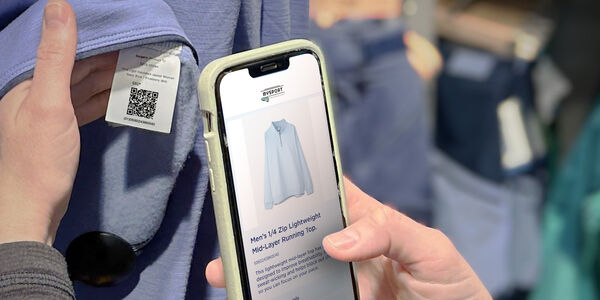
Retailers are responding with digital product narratives and accessible sustainability data. QR codes and Digital Links enable reliable sharing of product provenance and lifecycle information, helping UK retailers meet growing consumer demand for transparency.
3. Social shopping 2.0
Social commerce in the UK continues to expand. In 2025, social commerce accounted for nearly £6.5 billion of UK retail sales, and growth is expected to accelerate in 2026 (eMarketer UK, 2025). Virtual influencers, live stream events and in-app marketplaces are making social interactions a key driver of product discovery.
Unique product identifiers ensure consistent listings across social platforms, making it easier for brands to manage campaigns and maintain product authenticity.
4. Resale becomes everyday
Circular retail is moving from niche to mainstream. Around 25 per cent of UK consumers purchased second hand or refurbished items in 2024, and this number is growing (Statista UK, 2024). Brands now offer trade ins, refurbishment and verified resale as standard options.
Persistent identifiers allow products to be tracked through multiple ownerships, ensuring transparency and authenticity in the resale market.

5. Smarter faster supply chains
UK retail continues to see strong online growth. Online sales reached £127.4 billion in 2024, accounting for roughly 28 per cent of total UK retail sales (Retail Gazette, 2024). To meet demand, retailers are investing in adaptive real time supply chains with AI forecasting, inventory optimisation and automated replenishment.
Standardised product, location and logistics identifiers enable accurate inventory tracking, improved supplier coordination and faster fulfilment, ensuring retailers can meet both online and in store demand efficiently.
6. Sustainability built in
Sustainability is now a baseline expectation. In 2025, over 70 per cent of UK consumers reported checking labels for ethical or environmental information before purchasing (IGD Global Retail Trends, 2025). Retailers are embedding sustainable practices across sourcing, production, packaging and logistics, while also offering circular and resale options.
GS1 standards allow retailers to share verifiable sustainability data with consumers, helping to build trust and meet regulatory expectations.
Looking ahead
In 2026, UK retail is defined by convenience, transparency, sustainability and innovation. AI driven shopping, social commerce, resale, smarter supply chains and embedded sustainability are transforming how consumers discover and buy products.
Shoppers increasingly expect seamless experiences, ethical practices and verified product information, while retailers that adopt these trends, supported by GS1 standards, can maintain trust, efficiency and competitiveness in a fast changing market.

Insights from, Emma-Michaela Rigby, engagement manager at GS1 UK
What this means for GS1 UK members
For our members, these trends highlight the increasing importance of accurate product identifiers and high quality data.
Whether selling direct, through distributors or via digital marketplaces, GS1 standards remain the foundation for trust, compliance and growth in an increasingly digital B2B landscape.
2026 will not simply be about being online; it will be about being connected, intelligent and transparent.
By adopting global standards today, UK businesses can prepare to thrive in the B2B e-commerce world of tomorrow.