
February 10, 2026 Industry news
Deforestation is one of the most pressing environmental challenges we face today.
The expansion of agricultural supply chains is the leading cause of deforestation worldwide. As the demand for food, biofuels and other agricultural products increases, forests are cleared to make way for crops like soy, palm oil and coffee, as well as grazing land for livestock. That is why the European Union Deforestation Regulation (EUDR) is a vital policy aimed at ensuring commodities like beef, soy, palm oil and timber are not sourced from deforested land.
To help navigate these regulations and promote more sustainable supply chains, many businesses are turning to GS1. GS1 standards provide a structured approach to identifying, capturing and sharing data on vast swathes of products and materials worldwide, enabling businesses to track origins, verify sustainability credentials and meet due diligence requirements with confidence and accuracy.
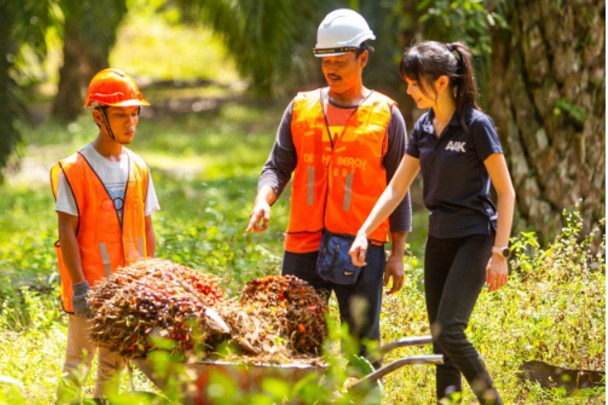
The scale of the deforestation challenge
Between 2000 and 2011, key commodities such as those already mentioned were responsible for 40 per cent of global tropical deforestation and 44 per cent of associated carbon emissions. To curb illegal deforestation, governments and international organisations have introduced stricter regulations.
For businesses operating within these affected supply chains, demonstrating compliance with these regulations can be a complex and difficult task. Seamless data collection, traceability and information sharing between multiple stakeholders, ranging from raw material producers to manufacturers and retailers, demands a standardised approach to data.
The solution: GS1 standards
GS1 standards provide a globally recognised framework for enhancing supply chain transparency. By harnessing the power of unique identifiers, data carriers and data sharing, organisations can efficiently track commodities and verify sustainability credentials. Key GS1 standards that support deforestation-free supply chains include:
- Global Trade Item Number (GTIN): enables unique identification of products throughout the supply chain
- Global Location Number (GLN): identifies specific locations involved in the production, processing and distribution of commodities
- Serial Shipping Container Code (SSCC): facilitates traceability of shipments and ensures visibility during transit
- QR codes powered by GS1: Support real-time data sharing, enabling businesses to exchange critical sustainability information with partners and regulators
Supporting EUDR compliance with GS1 standards
Under the EUDR, businesses placing products on the EU market must demonstrate that their products are deforestation-free, comply with local regulations and are accompanied by a due diligence statement (DDS). GS1 standards play a pivotal role in facilitating compliance by:
1. Product and batch-level identification
By using GTINs and batch numbers, businesses can accurately trace individual product batches back to their point of origin. This enables supply chain actors to provide verifiable proof of compliance with deforestation-free sourcing requirements.
2. Seamless data capture and storage
Data carriers such as QR codes powered by GS1, embedded with GS1 identifiers, allow seamless data capture throughout the supply chain. This information can be securely shared and accessed by stakeholders to check and approve compliance claims.
3. Real-time information
GS1 standards ensure that deforestation-free claims are efficiently communicated between suppliers, manufacturers, retailers and regulatory bodies. Through EPCIS and GS1 Digital Link, businesses can share DDS and other compliance documents in real time.
4. Streamlined customs and compliance
GS1 standards integrated into digital customs systems enable businesses to link DDS to customs declarations, speeding up the verification process. This is crucial, as non-compliance could lead to trade restrictions or financial penalties.

Case example: sustainable soy supply chain
A European soy importer has adopted GS1 standards to comply with the EUDR requirements. By assigning GLNs to farms and processing facilities, the company is able to track soy shipments and ensure they are sourced from deforestation-free areas. Batch-level GTINs provide granular tracking, while EPCIS enables real-time data sharing between supply chain partners and EU regulators.
Through the integration of GS1 standards, the company has reduced compliance costs by automating data collection and reporting. This has enhanced transparency, building trust with customers and regulators, while also improving supply chain efficiency and reducing delays in customs clearance.
Beyond regulatory compliance, GS1 standards also help strengthen supply chain sustainability. They increase consumer trust by providing verifiable proof of ethical sourcing, which is increasingly important to consumers prioritising sustainable products. The structured data collection enabled by GS1 standards also improves operational efficiency, allowing for better logistics planning and reducing inefficiencies and costs. Businesses investing in sustainable sourcing can also use GS1 enabled traceability to measure and communicate the impact of their sustainability initiatives, maximising the returns on these investments.
The future of deforestation-free supply chains
As businesses navigate the complexities of deforestation regulations, GS1 standards provide a robust solution for ensuring transparency, traceability and compliance. By adopting these GS1 standards, companies can meet regulatory requirements while simultaneously enhancing sustainability across their supply chains.
Looking ahead, continued collaboration between industry stakeholders, regulatory bodies and GS1 organisations will help drive innovation, improve data-sharing and further accelerate global efforts to combat deforestation.