
What is a Global Returnable Asset Identifier (GRAI)?
A Global Returnable Asset Identifier (GRAI) is a globally unique identifier used to identify returnable or reusable assets that move through the supply chain.
GRAIs can support full visibility of returnable assets across the supply chain, helping to build trust in the accuracy and interoperability of asset data.
What is it used for?
GRAIs are suitable for managing returnable transport items and other assets that move across the supply chain such as:
- Pallets
- Beer kegs
- Gas cylinders
- Rentable tools and equipment
They allow organisations to track, sort or maintain these assets by type, or by individual items if the optional serial number is included.
The structure of a GRAI
The Global Returnable Asset Identifier (GRAI) is an alphanumeric code of up to 30 characters, used globally to uniquely identify returnable assets
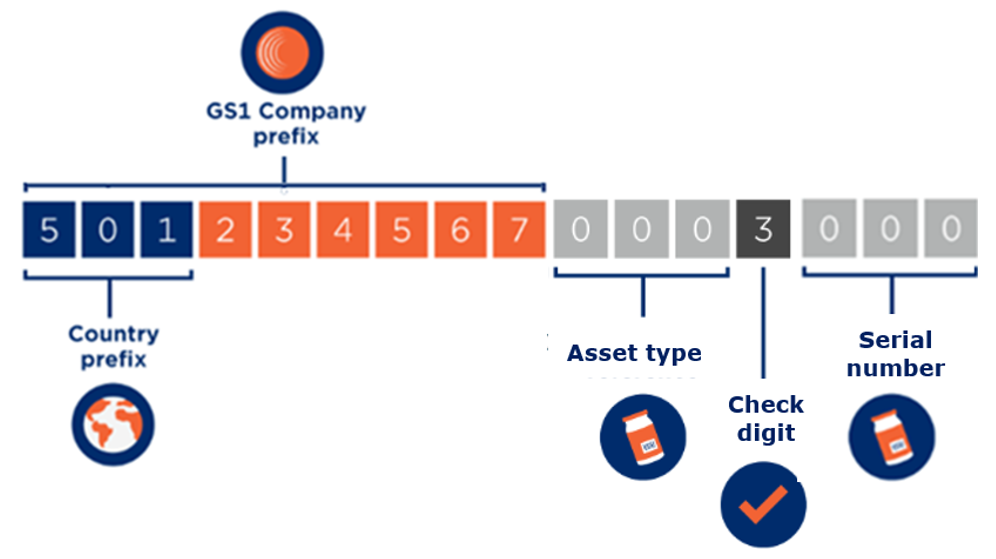
GS1 Company Prefix (GCP) – a unique number allocated by GS1 organisations, used to create globally unique identifiers. It is the same prefix provided as part of GS1 UK membership and ensures identifiers are unique worldwide.
Asset type – identifies the type of returnable asset (for example, a specific crate or pallet design).
Check digit – used to validate the structure of the identifier and detect any errors.
Serial number (optional) – Used when individual items of the same asset type need to be distinguished (for example, to track specific containers).
This can also be numeric or alphanumeric and brings the total GRAI length up to a maximum of 30 characters.
Tip: The length of the GS1 Company Prefix varies based on an organisation’s numbering needs, with shorter prefixes allowing more digits for asset type allocation and longer prefixes reducing this capacity.
How does it help in business?
When encoded in a barcode (such as GS1‑128 or GS1 DataMatrix) or carried in an EPC/RFID tag, a GRAI allows each individual asset to be scanned and uniquely identified. This supports the capture of events (e.g. dispatch, return, or maintenance), improving visibility, enabling asset sharing or rental models, and supporting effective maintenance and lifecycle management..
How is a GRAI different from a GIAI?
Use a GRAI when the asset is returnable - If the item is reused and moves between organisations (for example pallets or crates), a GRAI is the right choice. It supports tracking movement, returns, and reuse across the supply chain.
Use a GIAI when the asset is owned and managed by one organisation - If you need to uniquely identify a particular asset (such as a laptop or a piece of equipment) through its life cycle, use a GIAI. It’s suitable for tracking assets that require individual identification, supporting asset registers and internal asset management systems.
For additional resources follow the link.