July 06, 2026 Industry news
For brands, manufacturers and importers of in-scope drinks containers, barcode readiness is now a live packaging, data and operational issue.
Global Trade Item Number (GTIN) allocation (the unique product identifier typically carried within a barcode), product registration, label changes and stock planning all need to be considered well before the scheme goes live on 1 October 2027.
The update confirms that in-scope products will need to carry barcodes registered with Exchange for Change. This includes barcodes created specifically for the UK DRS, as well as international barcodes used on products sold in other markets as well as the UK.
What Exchange for Change has said
Exchange for Change is the scheme administrator for the deposit return scheme in England, Scotland and Northern Ireland. The scheme will apply to in-scope drinks containers made wholly or mainly of PET plastic, aluminium or steel, with a capacity from 150ml to 3 litres.
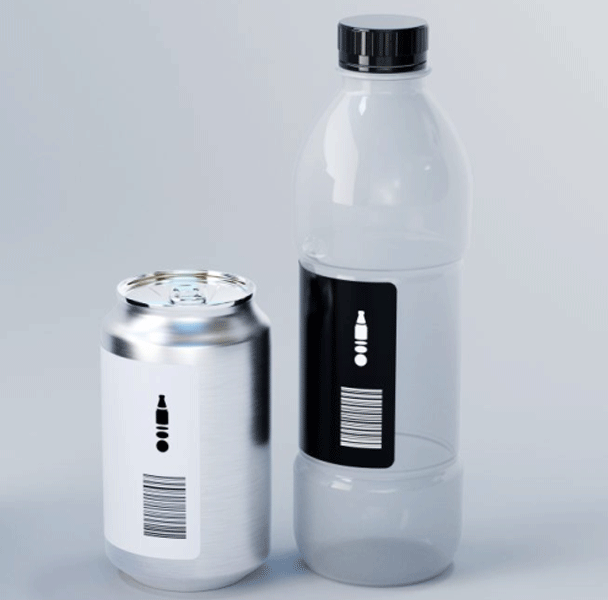
Its updated material specification states that scheme containers must carry a barcode registered on the Scheme Article List. Each individual container must display this barcode so it can be identified by reverse vending machines and at Exchange for Change counting and sorting facilities.

The material specification states that all existing product barcodes will need to be changed.
It also states that international barcodes used on products sold in other markets as well as the UK will need to be changed and registered with Exchange for Change.
The reasons are traceability and fraud prevention. Barcodes help identify products where the deposit has been applied and the relevant producer fee has been paid.
They also help reduce the risk of pre-DRS stock being returned for deposit redemption.
Producers should review sections 5 and 5.5 of the latest material specification, which cover product identification, barcoding and international barcodes.
The standards behind the barcode
The updated specification sets out the barcode types that can be used for DRS, including EAN 13, EAN 8, UPC A and UPC E. It also states that barcodes used within the scheme must comply with the GS1 General Specifications Standard or equivalent and be unique to the individual product.
The barcode printed on the pack is scanned at point of sale and links the product to the data needed by retailers, producers, return point operators and scheme systems.
For most retail products, the identifier carried in the barcode is the Global Trade Item Number, or GTIN. This is the unique number used to identify a product. For DRS, this matters because deposit-bearing products need to be recognised at point of sale, validated when returned and reconciled through scheme systems.
GS1 standards provide a common language for that identification. They do not replace the regulations or Exchange for Change scheme guidance, but they help different systems recognise the same product in the same way.
In many cases, this will mean checking whether new GTINs are needed, particularly where a DRS product must be identified separately from pre-DRS stock, or where individual containers need to be identified separately from a multipack.
Producers should also be aware that Exchange for Change has indicated that additional charges may apply in some circumstances, including where international barcodes are used, with details expected to be confirmed through the producer fee structure.
What producers should review now
Barcode changes should not be left until the final stages of packaging artwork approval.
A practical starting point would be to:
- Check whether your drinks containers are in-scope of DRS
- Review your current GTIN allocation and barcode approach
- Confirm whether products use UK specific or international barcodes
- Understand what needs to be registered with Exchange for Change
- Plan for new GTINs and updated barcodes where required
- Review barcode quality, placement and readability requirements
- Make sure individual containers in multipacks can be identified separately from the outer pack
- Build barcode changes into artwork, approval and production timelines
- Speak to GS1 UK if you are unsure which identification approach is right for your range
Multipacks, international products and QR codes powered by GS1
Multipacks and international products are two areas worth checking carefully.
Exchange for Change states that each individual container within a multipack will require a barcode so it can be returned for a refund and read by reverse vending machines and counting centres. The barcode on the outer packaging should not match the barcode on the individual containers.
For international products, Exchange for Change has made clear that barcodes used on products sold elsewhere as well as in the UK will need to be changed and registered with Exchange for Change.
The latest guidance is focused on product identification and barcode requirements for DRS. It should not be read as a requirement to adopt QR codes powered by GS1.
However, many brands will already be reviewing packaging as part of their DRS preparations.
QR codes powered by GS1 can carry trusted, GTIN based identification when created in line with GS1 standards. They can also connect a physical product to richer digital information, including recycling guidance, product information, consumer engagement or supply chain data.
How GS1 UK can help
Our team can help your business understand product identification standards, GTIN allocation and what to consider when preparing products for registration with Exchange for Change.
We can also support brands exploring whether QR codes powered by GS1 are relevant to their packaging, product data or consumer engagement plans.
If you are reviewing your products for DRS and are unsure what the latest guidance means for your barcodes, GTINs or packaging plans, get in touch today.
Useful resources