
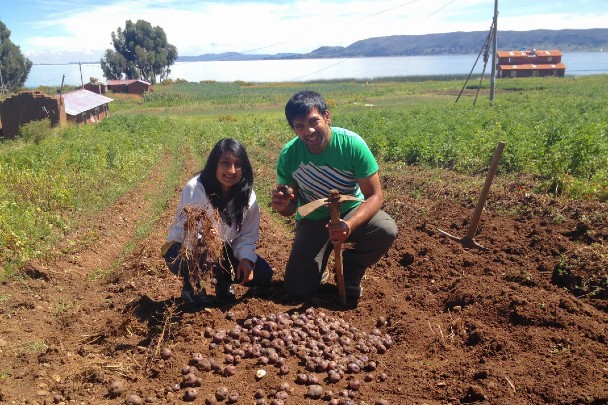
For Superfoodio founders Nirali and Jag Mankodi, the idea for their business did not begin in a kitchen or a boardroom. It took shape much further from home, while backpacking across South America after pressing pause on their corporate careers in London.
Spending six months travelling gave them time to slow down and immerse themselves in local cultures. Living with families and learning how food was grown, shared and valued exposed them to a different relationship with eating, one rooted in simplicity and respect for ingredients. Foods that might be labelled as superfoods in the UK were simply everyday staples, eaten without ceremony.
“We learned so much about where food comes from and how people live off the land sustainably,” Nirali says.
Those experiences planted the seed for what would become Superfoodio. Somewhere between long bus journeys and train rides across Bolivia and Peru, early ideas were scribbled down. What started as loose creative thinking became a clearer ambition: to build a food brand that made simple, nourishing ingredients easier to enjoy in everyday moments.
That ambition would eventually lead them to rethink one of the UK’s most familiar cupboard staples in a very different way.
Spotting the gap and starting small
Back in the UK, Nirali and Jag began turning those early ideas into something more concrete. Rather than rushing to launch, they focused on learning, testing concepts and understanding the food and drink landscape before committing fully.
Early prototypes were shared with friends and family, while conversations with mentors helped shape both the product and the wider proposition. Trade shows proved particularly valuable, not just for visibility but because they imposed focus. Working towards a fixed date forced early decisions on packaging, pricing and positioning.
“There was a moment where we realised we needed a deadline,” Nirali says. “A trade show gave us that push.”
Not every idea landed. Feedback gathered outside their immediate circle highlighted issues they had not yet considered. This important stage reinforced an early lesson. That progress comes from testing, listening and adjusting, rather than waiting for everything to feel ready.
Creating something that did not yet exist
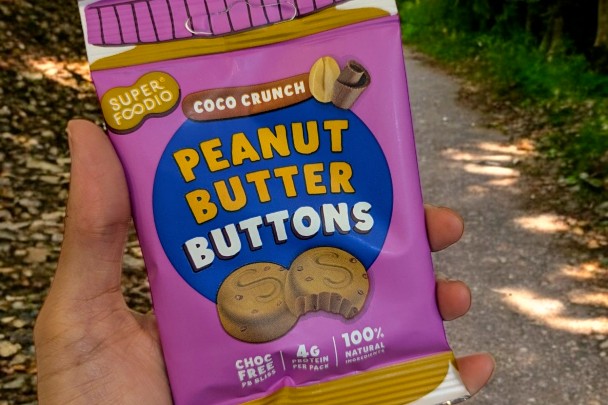
The defining leap behind Superfoodio came from a simple frustration. Peanut butter was a firm household favourite, but it was awkward to eat on the move. Jars, spoons and wipes did not fit easily into busy days, particularly when juggling work, travel and parenting.
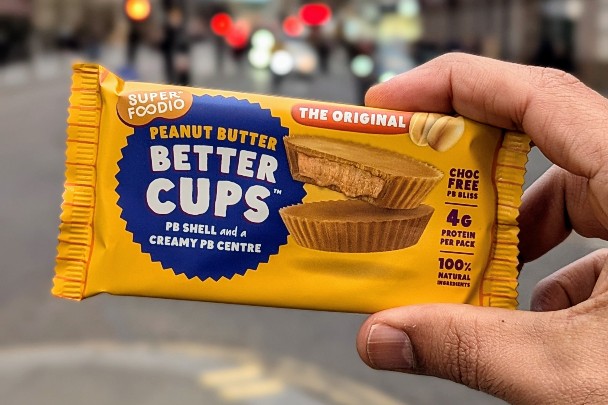
Rather than adapting an existing snack, Nirali and Jag questioned the format itself. Chocolate was available as bars, buttons and powders, so why had peanut butter remained tied to a jar?
Turning that idea into reality proved far more complex. Peanut butter buttons did not exist in the UK market, and there was no established manufacturing model to follow. Developing the product took around 20 months, moving from kitchen experiments to working with manufacturers to adapt machinery and production processes.
“There wasn’t a clear answer for how to make what we wanted,” Nirali explains. “We had to piece it together through iteration.”
Throughout development, one principle never shifted: taste mattered as much as simplicity. Ingredients were kept natural and straightforward, but never at the cost of enjoyment.
Creating something genuinely new took time, patience and compromise. There were no shortcuts where no existing model existed. Even the decision to call the products ‘buttons’ was deliberate. While the concept was unfamiliar, the format was not, making the product easier to understand and lowering the barrier to trial.
From direct to consumer to retail momentum
Superfoodio’s launch coincided with lockdown. As cafés, offices and independent retailers closed overnight, the business had to adapt quickly. Selling direct to consumer through Amazon became less about growth and more about stability.
Customer reviews and repeat purchases provided valuable insight, shaping flavours, formats and messaging based on real behaviour rather than assumptions.
As restrictions eased, retail opportunities followed. Participation in the Co‑op incubator programme brought early exposure, followed by involvement in Tesco’s accelerator scheme. Rather than replacing existing channels, retail broadened Superfoodio’s reach and introduced the brand to new audiences.
Being on shelf brought new demands. Consistency, availability and presentation became just as important as innovation, requiring the business to evolve operationally as well as commercially.
Alongside supermarkets, Superfoodio continued exploring food service and workplace environments, paying close attention to where and when people were actually consuming their products.
Learning the realities of scale
Growth brought its own challenges. Lockdown wiped out large parts of the business almost overnight, forcing a rapid pivot. Having committed early to clear milestones helped Nirali and Jag move forward rather than retreat into planning.
Retail introduced unforeseen constraints, including theft prevention measures that affected in-store visibility. In some locations, shelf-ready packaging was removed to deter theft. The response came in the next packaging run, adding clearer branding to ensure products remained identifiable.
“These were things we had never planned for,” Nirali reflects. “You don’t anticipate them, you adjust to them.”
Rising costs, regulatory change and fluctuating ingredient prices added further pressure. Like many SMEs, Superfoodio learned to balance ambition with pragmatism, refining what was already working rather than chasing growth at any cost.
Laying the operational foundations
As the business grew, getting the basics right became increasingly important. Retail listings, exports and logistics all depended on accurate identification and consistent data.
Superfoodio joined GS1 UK early to access barcodes, recognising them as a practical requirement for being retail ready. As the business expanded into new markets and channels, those foundations helped remove friction and support smoother scaling.
The brand has since used QR codes powered by GS1 to support campaigns, brand storytelling and customer engagement. Rather than linking to a single fixed destination, the content behind the QR codes has evolved over time. “We see them as a way to keep the conversation going,” Nirali says.
Learning from other founders through the GS1 UK community has provided reassurance and perspective during periods when the operational demands of growth intensified.
Looking ahead
Superfoodio remains focused on steady, sustainable growth. Export markets in the Middle East have shown early promise, while new direct-to-consumer subscription models are helping strengthen relationships with customers.
For the founders, progress has come through a series of considered decisions rather than a single defining moment. It is a journey shaped by curiosity, resilience and adjustment.
As Superfoodio continues to grow, those early principles remain intact: simple ingredients, great taste and products designed to fit into real life.
Advice for fellow founders
Looking back, Nirali and Jag highlight three lessons they believe are particularly valuable for other founders.
First, setting clear deadlines early on helped move ideas out of theory and into reality, where learning accelerates fastest.
Second, they found that innovation is more powerful when it feels familiar. Using recognisable formats and language helped customers quickly understand a new product in busy retail environments.
Finally, they stress the importance of investing early in the unglamorous foundations of a business. Getting operational basics right from the start ade it easier to scale later on.