

Key results
Nearly 3,000 implants captured in a year amounting to almost £1M
One day a week released back to patient care, for every senior radiology nurse
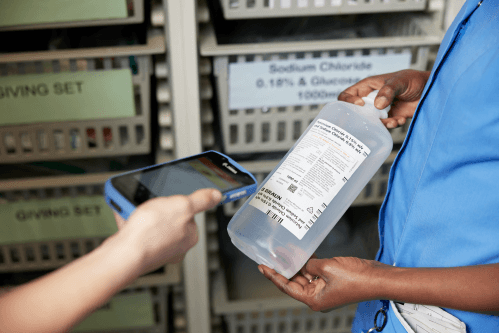
The problem
Manchester University NHS Foundation Trust’s (MFT) operates across 10 separate sites across the trust. With plenty of inventory to manage across the ten sites, the trust had been challenged to become more efficient in order to reduce procurement costs and product waste.
However, with several locations to cover, obtaining full visibility of supplies across the organisation proved difficult, sometimes leading to inefficiencies. This also led to unwarranted clinical and cost variation between surgical procedures.
The solution
MFT decided to implement an inventory management system (IMS) – one that could hold GS1 Global Trade Item Numbers (GTINs) – to improve traceability and stock control across the organisation.
Via the IMS, the materials management department would then be able to track all inventory from purchase through to usage – enabling greater visibility of available product.
The results
Over the course of implementation, the trust achieved benefits in four key areas:
- Product availability and forecasting: Nearly 3,000 implants captured in a year, almost £1M worth.
- Patient safety and product recalls: Recall processing times reduced to minutes instead of days or weeks.
- Unwarranted clinical variation: Reduced unwarranted clinical and cost variation between surgical procedures.
- Releasing staff capacity: One day a week saved and released back to care, for every senior radiology nurse.

We will use it to drive standardisation in thoracic surgery as well as to measure the financial impact of introducing new procedures when we link in with data such as length of stay and complications for example. I can’t tell you how long I have been waiting for this level of quality data!"
Felice Granato
Consultant thoracic surgeon and trust speciality training lead
Next steps
The intention is to continue rolling out the IMS and patient-level costing to areas that do not yet have it.
Beyond this the project will centre on asset management. The trust will start the pilot with high-cost equipment, with a view to tracking other key moveable assets such as beds and trolleys using Global Locations Numbers (GLNs), to track to specific locations.